

AI is dominating venture capital like never before. In 2025, €190.5 billion - half of global VC funding - went to AI startups. France alone saw €5.18 billion in AI funding, representing 62.5% of its total startup investments. This trend continues in 2026, with VCs focusing on three critical areas:
- Infrastructure: Over €47.2 billion invested in GPUs, energy-efficient data centres, and advanced chips. France's nuclear-powered AI projects and innovative cooling systems are leading the charge.
- Generative AI: LLMs and autonomous agents attracted 48% of global VC funding in 2025. Pricing models for services like Google Gemini and Anthropic Claude are evolving rapidly.
- Industry-Specific AI: Applications in healthcare, finance, and robotics are transforming sectors. For example, Insilico Medicine's AI-discovered drug reached Phase IIa trials, and Figure AI's robots improved BMW's production efficiency.
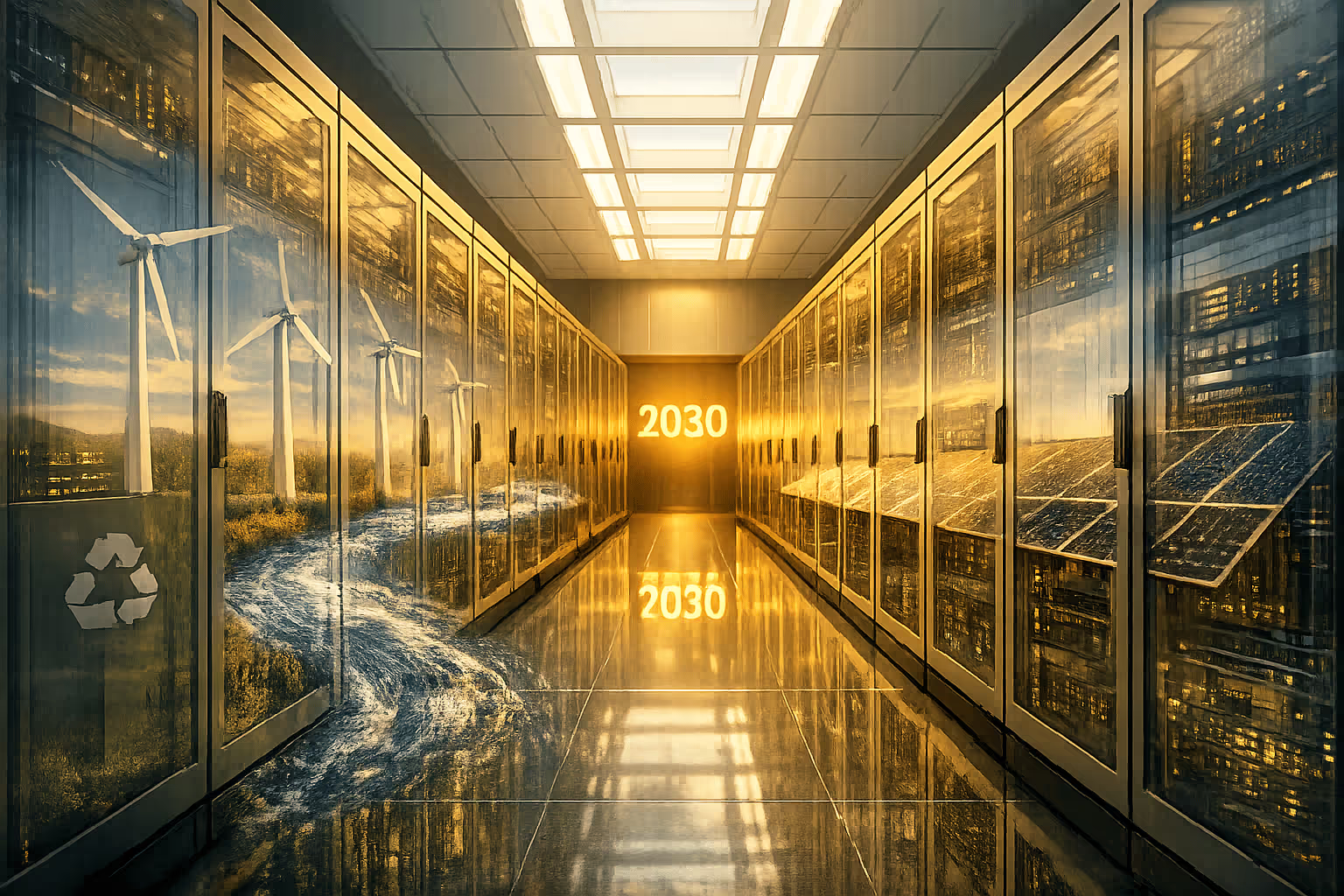
Energy consumption is a growing concern. Data centres consumed up to 536 TWh in 2024, prompting investments in energy-efficient solutions like liquid cooling and heat recovery. France’s low-carbon nuclear grid is a key advantage, with plans for a €10 billion nuclear-powered supercomputer by 2026.
VCs are not just funding innovation but also building the infrastructure and ecosystems needed for AI to thrive. For entrepreneurs, the focus is shifting from scaling models to delivering measurable results in specialized domains. For investors, technical due diligence and unit economics are more critical than ever.
Key Stats at a Glance:
- Global AI VC Funding (2025): €190.5 billion (50% of total)
- France AI VC Funding (2025): €5.18 billion (62.5% of national total)
- Top Investment Areas: Infrastructure (€47.2B), Generative AI (€213.3B), Robotics (€38.4B)
- Energy Use by Data Centres (2024): 415–536 TWh (2% of global electricity)
The AI investment landscape in 2026 is all about scaling infrastructure, refining applications, and addressing energy challenges. Entrepreneurs and investors should focus on execution, operational efficiency, and industry-specific solutions to stay ahead.

2026 AI Investment Landscape: Global VC Funding Distribution and Key Statistics
Why I'm Bullish on AI in 2026 (Despite the Bubble Talk) | Startup Funding Analysis
sbb-itb-e314c3b
Where VCs Are Investing in AI in 2026
Venture capitalists are focusing their investments on three main areas within the AI ecosystem: infrastructure, generative AI and language models, and industry-specific applications. In 2025 alone, AI companies attracted around €213.3 billion, accounting for 48% of all venture funding. This highlights a dual focus: building the foundational technologies powering AI and creating specialised solutions with impactful applications [8].
Infrastructure and Computing Power
Infrastructure continues to command significant attention from venture capitalists. In 2025, more than €47.2 billion was invested in this area, supporting advancements in GPUs, cutting-edge AI chips, and energy-efficient data centres [1].
One standout example is Brookfield Asset Management, which committed €20 billion over five years to develop data centres in France, including €15 billion for Data4. Similarly, Sesterce, a French cloud provider, allocated €445.2 million to a Valence AI data centre featuring 40,000 GPUs and innovative waste-heat cooling technology [11][10]. As Sikander Rashid of Brookfield Asset Management put it:
"France is a great location for the build-out of artificial intelligence infrastructure because of the country's supportive policy framework and skilled labor." [11]
Nvidia's Blackwell architecture is a cornerstone of these developments, delivering 25× better energy efficiency and 30× faster inference compared to earlier models [3]. For example, Mistral AI deployed 18,000 Grace Blackwell GPUs for enterprise needs [9]. Meanwhile, Unconventional AI made headlines in December 2025 by raising €438.9 million in a record-breaking seed round to develop energy-efficient analogue and mixed-signal chips [7]. These investments highlight the growing emphasis on reducing power consumption to create sustainable AI infrastructure.
Generative AI and Multilingual Language Models
Generative AI and large language models (LLMs) also stand out, drawing 48% of global venture capital funding in 2025 [8]. The focus has shifted from merely scaling models to creating "autonomous agents" capable of handling complex business tasks independently. Pricing models for these advanced systems are evolving as well. For instance, Google Gemini 3 Flash charges €0.47 per million input tokens and €2.83 per million output tokens, while Anthropic Claude Opus 4.5 costs €4.72 per million input tokens and €23.59 per million output tokens [3].
Industry-Specific AI Applications
Venture capitalists are also targeting AI solutions tailored to specific industries like healthcare, finance, and manufacturing. In healthcare, Insilico Medicine achieved a major milestone in June 2025 by publishing Phase IIa results for Rentosertib in Nature Medicine. This marked the first time a drug discovered entirely through generative AI reached this clinical stage [3].
Robotics and physical AI are another major focus area, with startups in this sector securing €38.4 billion in 2025 - 9% of total venture funding [8]. A notable example is Figure AI, which reached a valuation of €36.8 billion after a successful pilot at BMW's Spartanburg plant, where its robots processed over 90,000 automotive parts [8][3].
In enterprise security, Saviynt raised a €660.5 million Series B in December 2025 at a valuation of €2.8 billion. The company is developing AI-driven identity governance solutions to support the integration of autonomous AI agents into the workplace [7]. This demonstrates how businesses are preparing for a future where AI agents collaborate with human employees.
| Sector | 2025 VC Funding (Global) | Key Focus Areas |
|---|---|---|
| Infrastructure | €47.2 billion | GPUs, specialised chips, energy efficiency |
| Generative AI/LLMs | €213.3 billion | Foundation models, multimodal agents |
| Robotics/Physical AI | €38.4 billion | Humanoid robots, autonomous vehicles |
| Healthcare AI | €10.1 billion | Drug discovery, medical imaging |
| Fintech AI | €7.0 billion (Europe) | Fraud detection, risk management |
Regional and Government-Backed AI Programs
France is making bold strides in artificial intelligence (AI) through a mix of government initiatives and strategic investments. In February 2025, President Emmanuel Macron announced a €109 billion investment plan aimed at establishing France as a leader in Europe's AI infrastructure. This move reflects a competitive ambition similar to that of the United States. Foreign investments, including those from MGX and Brookfield Corporation, highlight France's growing appeal in the AI sector. Together, these initiatives form the backbone of France's comprehensive AI strategy.
France's AI Strategy and Government Funding
France's public funding efforts are designed to accelerate AI innovation alongside its already vibrant venture capital landscape. The France 2030 scheme, now in its second phase with over €1 billion allocated, and Bpifrance's plan to mobilize €10 billion by 2029, are driving advancements through innovation loans, guarantees, and co-investments with private venture capital firms [12][14].
Energy infrastructure is another key pillar of France's AI strategy. By leveraging its low-carbon nuclear grid, the government has pledged one gigawatt of nuclear power for AI training by the end of 2026. A major milestone in this plan is the February 2025 agreement with Fluidstack, an AI cloud platform, to build a €10 billion nuclear-powered supercomputer set to go live in 2026 [13][18]. Additionally, Mistral AI's CEO, Arthur Mensch, announced plans for a multi-billion-euro AI cluster in Essonne, just south of Paris [18].
The Tibi Initiative plays a central role in channeling private capital into AI ventures. Its second phase raised the commitment target to €15 billion by 2026, with €6.2 billion already deployed into venture capital between 2023 and early 2025 [15]. This public–private collaboration has helped France secure 41 AI-related foreign investment projects in 2024, making it Europe's top destination for such investments [12].
Public–Private Partnerships in AI Development
Public–private partnerships are proving essential in scaling AI adoption across various industries. One notable example is the AI Booster France 2030 programme, launched in September 2023 by Bpifrance and the Ministry of Economy. By 2024, this initiative had supported over 600 small and medium-sized enterprises (SMEs) through diagnostic services and training, boosting the adoption of generative AI among French SMEs from 15% in 2023 to 31% in 2024 [14]. These partnerships complement venture capital activities, creating a robust ecosystem for AI innovation.
Infrastructure development has also benefited from these collaborations. In February 2025, Mistral AI expanded its partnerships with Veolia and Dassault Systèmes to integrate large language models into industry-specific applications [13][16]. Meanwhile, Accenture launched generative AI centres in Paris and Sophia-Antipolis, working closely with academic institutions like Institut Polytechnique de Paris and Sciences Po [12].
On a broader scale, the EU AI Champions Initiative brings together institutional investors such as Blackstone, KKR, and General Catalyst to support AI startups and infrastructure across Europe [16][17]. This cross-border effort not only provides French startups with greater access to funding but also aligns them with European regulatory standards.
Nicolas Dufourcq, CEO of Bpifrance, summed up this collaborative spirit:
"Through our investments and continuous support, we are strengthening France's position as a global player in this strategic field." [14]
AI Sustainability and Energy Efficiency Investments
As venture capitalists (VCs) continue to focus on building advanced AI infrastructure, sustainability has become a core element of their strategies. Today, VCs are prioritizing startups that combine AI innovation with efforts to lower carbon footprints, ensure energy reliability, and secure sustainable energy supplies - what experts refer to as "infrastructure that enables AI" [22]. Dr. Gideon Friedmann, CTO of NetZero Tech Ventures, captures the moment perfectly:
"The climate tech ecosystem is undergoing the most significant conceptual shift of the past decade" [22].
The numbers are staggering. Data centres currently consume around 415 TWh of electricity annually, which accounts for 1.5% of global energy use. By 2030, this figure could more than double to 945 TWh [21]. In France alone, CleanTech and Energy startups raised €979.4 million in 2025, making up 11.9% of total venture funding [4]. Across Europe, 54 startups focused on next-gen computing with strong climate benefits secured $970 million between 2019 and early 2025, with $305 million raised in 2024 alone [20][24].
Energy-Efficient Data Centres and Computing
Sustainability is now driving innovation in data centres, complementing earlier investments in high-performance AI hardware. France, with its low-carbon nuclear energy grid, has emerged as a prime location for energy-efficient AI infrastructure. In February 2025, Arthur Mensch, CEO of Mistral AI, announced plans to invest billions of euros in an Essonne-based data centre powered entirely by decarbonised energy. As Mensch explained:
"We chose France because of its energy efficiency, the quality of its energy mix when it comes to carbon emissions" [25].
Cooling technology has also become a critical focus. Traditional air cooling systems are no longer sufficient for high-powered AI chips exceeding 500 watts. This has led to significant funding for liquid and immersion cooling technologies, which can slash energy use by up to 95% [23]. For example, Barcelona-based Submer secured $55 million in Series C funding in 2025 to expand its immersion cooling solutions [23]. Cooling typically accounts for up to 40% of a data centre’s energy costs, so these innovations make both environmental and financial sense [19].
Innovative waste heat recovery projects are also making waves. In late 2025, Microsoft and Finnish energy firm Fortum completed the world's largest waste heat recovery system, using 900 kilometres of underground pipes to transfer heat from data centres to 250,000 local residents [19]. Meanwhile, UK-based startup Heata is repurposing waste heat from distributed computing units to provide free hot water for households, saving families approximately £300 and reducing CO₂ emissions by 750 kilograms annually [23].
Beyond cooling, the development of next-generation hardware is reshaping energy efficiency. VCs are backing semiconductors made from Gallium Nitride (GaN) and Silicon Carbide (SiC), as well as advancements in quantum, neuromorphic, and optical computing to lower energy demands [20]. Companies like XGS Energy are also pushing the boundaries with proprietary heat-harvesting technology that accelerates geothermal energy development, reducing timelines from 5–15 years to just 12–18 months [19].
AI for Energy Grid Optimisation and Sustainability
On the software side, AI is playing a critical role in optimizing energy grids. Platforms that improve server utilization and cut computational waste can reduce energy consumption by as much as 50% [21]. For instance, DeepMind's AI-driven cooling system achieved a 40% reduction in energy use by making real-time adjustments [23].
Grid management solutions are also gaining traction among VCs. Flexecharge, for example, offers load management software that helps charge point operators lower grid fees by up to 70% through dynamic load balancing and integration of renewable energy sources [21]. Virtual Power Plants (VPPs) are another innovative approach, coordinating millions of distributed assets like EV batteries and heat pumps to stabilize the grid and manage the growing energy demands of AI [21].
Industrial applications further highlight the potential of AI. In January 2026, Lumoview introduced a patented system capable of capturing 3D spatial and thermal data in just two seconds per room. This innovation reduces traditional building surveying time by over 95%, enabling faster and more energy-efficient renovations across Europe [21]. Additionally, AI-driven process optimization can cut industrial emissions by 30–40% without requiring significant capital investment [21].
The criteria for investment are evolving. As Daria Saharova, General Partner at World Fund, put it:
"Switching data centres to green power is not enough – we must redesign how we compute to secure a sustainable, AI-powered future" [24].
VCs are now assessing startups based on a "triple mandate" that emphasizes energy independence, cost efficiency, and emissions reduction [21].
Conclusion: AI Investment Trends for 2026 and Beyond
The AI investment landscape has shifted from experimental beginnings to a phase defined by precision and results. What started as exploratory has now become a disciplined environment, where venture capitalists place greater emphasis on measurable outcomes and operational reliability [2][27]. Investors are consolidating their focus, favoring larger funding rounds for a select few companies that dominate critical infrastructure or foundational models [8][26].
Key priorities for venture capitalists now include unit economics, model performance, and managing inference costs [1]. For AI startups, the competitive edge no longer lies solely in the sophistication of their models. Instead, success hinges on effective distribution, seamless integration into essential workflows, and expertise in specialized domains [26][27]. As George Mathew, Managing Director at Insight Partners, aptly puts it:
"We're heading toward models and Agents that can complete a full day's worth of work with minimal or no human intervention, and we may already be there in some domains" [27].
With these trends in mind, both entrepreneurs and investors must adapt their strategies to thrive in this evolving market.
Practical Advice for Entrepreneurs and Investors
In this new era, clear, actionable strategies are critical. Entrepreneurs should shift their focus from creating isolated tools to building comprehensive systems - software that drives full operational workflows and encourages high user retention [27]. Industries like logistics, lending, and industrial operations, often overlooked, offer significant opportunities for AI to transform core processes [2][28]. Protecting profit margins is crucial, and strategies like model routing, caching, and hybrid inference can help mitigate the pressure from declining price-performance ratios [26]. Demonstrating viability through pilot programs or initial deployments is also essential, as investors increasingly demand evidence of solid unit economics and cash flow stability [6][29].
For investors, deep technical due diligence is a must. Evaluating inference costs and GPU fleet stability can provide critical insights into a startup's long-term profitability [2][1]. Startups focusing on identity and governance are particularly promising, as AI agents entering the workforce will need clear identities and restricted access, similar to human employees [7][5]. Additionally, prioritizing "full-stack AI-native" firms that achieve lower costs than traditional competitors can be a winning strategy. With nearly 40% of seed-stage AI startups generating no meaningful revenue, assessing unit economics has become more important than ever [1].
Staying Ahead in AI Innovation
As the focus sharpens on execution, staying ahead of emerging trends is equally important. By 2026, deployment will be the ultimate differentiator [2]. Entrepreneurs and investors must remain informed about developing areas like agentic SaaS, physical AI, and energy-efficient computing while keeping their focus on the fundamentals. Engaging actively with the broader AI ecosystem - through industry events, pilot projects, and strategic partnerships - can help uncover opportunities before they become saturated. Ryan Hinkle, Managing Director at Insight Partners, highlights the importance of customer satisfaction in this competitive market:
"As AI makes switching easier, being the least hated becomes a problem. Retention has often been a proxy for 'least hated,' not for delight. That has to shift to 'most loved'" [27].
The true leaders in 2026 and beyond will be those who blend technical mastery with deep domain knowledge and an unwavering commitment to delivering value to their customers.
FAQs
What are the main areas of AI investment for venture capitalists in 2026?
In 2026, venture capitalists are zeroing in on large language models, AI infrastructure, and foundational models - key components needed to expand AI capabilities. Investments are also pouring into data centres, advanced chips, and AI-driven business tools designed to enhance both reliability and scalability.
A clear trend is emerging: the focus has shifted to operational deployment. This means funding is being channelled into creating organisational workflows, governance frameworks, and infrastructure that help businesses integrate AI seamlessly. On top of that, sector-specific AI solutions are gaining momentum. Industries like healthcare, finance, and legal are seeing tailored AI applications designed to deliver practical and measurable outcomes, moving away from purely experimental approaches.
The overall investment focus is now on scaling proven AI technologies and ensuring they deliver real-world value, with a strong push toward achieving concrete results for businesses.
How is France using its energy infrastructure to advance AI innovation?
France is stepping up its game in the AI sector with a massive investment in energy-supported infrastructure. In February 2025, the government committed €109 billion to boosting AI capabilities, with a strong focus on sovereign data centers and cutting-edge computing power. Among the key initiatives is the ambitious "Mistral Compute" project. This project features 18,000 NVIDIA Grace Blackwell Superchips, housed in a 40 MW data center located in Essonne.
This approach reflects President Macron's push for strategic autonomy, aiming to reduce dependency on foreign infrastructure while encouraging local innovation. By emphasizing energy-efficient, high-performance facilities, France is carving out a leadership role in Europe’s AI landscape, building a solid base for future technological progress.
How is sustainability influencing AI infrastructure investments?
As the demand for computing power continues to skyrocket, sustainability has taken center stage in AI infrastructure investments. A growing number of investors are focusing on energy-efficient solutions to tackle environmental challenges. This includes advancements like optimised cooling systems, better power distribution methods, and the use of renewable energy sources. These efforts are designed to not only cut down on emissions but also lower operational costs, all while keeping up with the rising computational needs of AI.
The concept of green computing is also gaining traction, reflecting a broader shift in investment strategies. Climate-focused technologies and sustainable infrastructure are becoming key priorities. By aligning AI development with sustainability objectives, investors are promoting long-term stability, minimising environmental harm, and boosting economic resilience. This approach ensures AI's rapid expansion can coexist with global sustainability goals.