

Executives should aim to attend 3–5 AI events annually to stay informed without overcommitting. This range balances learning about advancements, networking with industry leaders, and maintaining focus on leadership responsibilities. Here's why this approach works:
- AI is evolving fast: 78% of organizations now use AI in at least one business function, up from 55% in 2023. Missing key updates could leave you behind.
- Networking matters: Informal discussions at events often provide deeper insights than formal sessions.
- Time management: Each event requires about 60 hours for attendance, preparation, and follow-up. Overloading your schedule can dilute focus and lead to burnout.
To maximize value, focus on high-impact events that align with your goals. For example, the RAISE Summit in Paris (8–9 July 2026) is a key gathering for AI leaders, offering targeted content, networking with 9,000+ attendees, and exclusive sessions tailored for decision-makers.
Key takeaway: Prioritize quality over quantity. Plan for 3–5 events per year, set clear goals, and focus on actionable outcomes.
AI Engineer Summit 2025 - AI Leadership (Day 1)
sbb-itb-e314c3b
Factors That Determine the Right Number of Events
The number of events an executive should attend isn't a one-size-fits-all solution. It depends on three main factors: your role and available time, how quickly your industry is changing, and the measurable benefits each event offers.
Role Responsibilities and Time Availability
Your role largely determines how much time you can dedicate to events. For instance, a Chief Technology Officer focused on AI development might require a different level of engagement compared to a Chief Financial Officer managing budgets. On average, you should plan for about 11.8 hours per event, plus an additional 48 hours for preparation and follow-up. Skipping follow-up efforts can significantly reduce the value you gain from attending.
Katie Harbath, Founder and CEO of Anchor Change, puts it succinctly:
Protecting your energy is part of the strategy [2].
This aligns with the "Broadcast vs. Exchange" approach: if you can access the main insights online, focus on events that provide unique opportunities for face-to-face interactions. Those hallway chats and private discussions often hold the most value.
Next, think about how fast your industry is evolving to decide how often you need to engage.
Industry Trends and Speed of Change
In some fields, like AI, advancements are outpacing governance and regulations. Dan Faggella highlights that attending AI events can open doors to new opportunities [3][1]. Some conferences provide updates on current trends, while others offer a glimpse into developments months ahead [2]. High-profile annual events like Davos or the Munich Security Conference often set the tone for the year in both geopolitical and industry contexts, making them critical for aligning with strategic goals.
For industries undergoing rapid transformation - such as moving from manual systems to AI-driven automation - frequent and targeted event attendance becomes crucial to staying competitive [3][1]. In these cases, the pace of change directly influences how often you should participate.
This ever-changing environment makes it even more important to evaluate the quality of events.
Event Relevance and ROI Assessment
To determine if an event is worth your time, consider these factors: the attendee profile (the real value often lies in networking with policymakers, platform teams, and academics, rather than just attending presentations [2]), the type of insights you need (immediate updates vs. long-term trends), and whether similar content is available elsewhere. If the event doesn’t offer exclusive value, it might not be worth attending.
Set a goal to engage in 5–7 strategic conversations with key contacts at each event. Within 48 hours after the event, turn those insights into actionable steps - update your strategies, follow up on leads, and share takeaways with your team [2]. This structured approach ensures you get the most out of every event you attend.
The Right Number: 3-5 High-Impact AI Events Per Year

Optimal AI Event Attendance Frequency for Executives: Comparing 1-2, 3-5, and 6+ Events Per Year
Balancing time, ROI, and the rapid pace of AI developments, attending 3-5 key events annually hits the sweet spot for most executives. This approach keeps you ahead of industry changes without overcommitting or risking burnout from constant travel.
For executives, staying focused is essential. By prioritizing a few high-value gatherings, you can engage more deeply and achieve better outcomes than by spreading yourself thin across numerous events.
Comparing Different Attendance Frequencies
| Attendance Frequency | Benefits | Drawbacks |
|---|---|---|
| 1-2 Events (Low) | Minimal disruption to leadership duties; reduced travel costs. | Potential to miss critical industry shifts; limited networking opportunities; feeling disconnected from fast-moving AI trends [2]. |
| 3-5 Events (Optimal) | Balanced professional growth; allows for in-depth learning; strong ROI; fosters 5–7 key strategic connections per event [2][5]. | Requires careful planning and selective event filtering to avoid wasting time on low-impact gatherings. |
| 6+ Events (High) | Broader exposure to fresh ideas and emerging voices [5]. | Risk of exhaustion and diminished returns from repetitive content [2][5]. |
Attending just 1–2 events per year might leave you out of the loop on critical developments, as the AI landscape evolves significantly every six months [4][2]. On the other hand, attending six or more events often leads to fatigue with little added benefit.
These comparisons highlight the importance of strategic event selection over sheer volume.
Quality Over Quantity
When it comes to events, meaningful interactions matter more than the number of engagements. Many senior leaders now prefer smaller, focused gatherings over large-scale conferences. These intimate settings foster trust and enable quicker decision-making [5]. Cristian Dina, CRO at The Next Web, summed it up well:
Leaders who run companies do not optimise for visibility. They already have it. They want rooms where time leads to insight, clarity, and decisions [5].
This shift reflects a broader trend: executives are increasingly selective, choosing events based on specific areas of interest - whether it’s AI safety, geopolitical dynamics, or platform policies [2]. The most impactful events focus on practical applications and peer-validated insights rather than vendor-driven hype. Prioritize gatherings where experts share real-world experiences, like "what broke and how we fixed it", and you’ll make the most of your time and resources.
Why RAISE Summit Should Be on Your Calendar
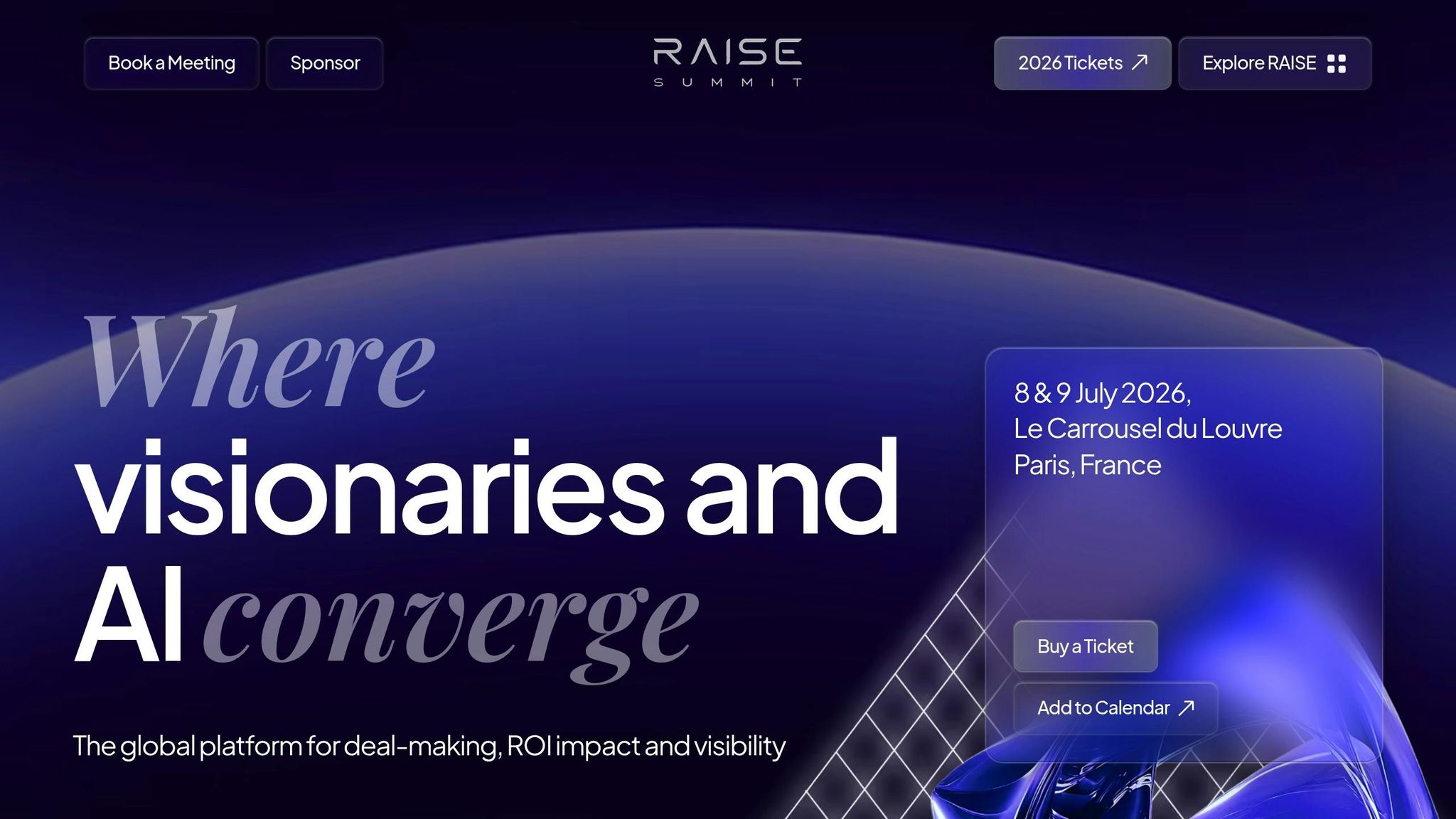
If you're deciding which 3–5 events to prioritise each year, the RAISE Summit deserves a spot on your list. Taking place on 8–9 July 2026 at the iconic Le Carrousel du Louvre in Paris, this event serves as the Annual Board Meeting for Global AI. It’s where top executives gather for critical strategic discussions [6]. Here’s a closer look at what makes this summit essential for AI leaders.
Networking with 9,000+ Attendees and 350+ Speakers
RAISE Summit brings together over 9,000 attendees from 2,000+ companies, with 80% of participants in C-level or founder roles [6][7]. This creates a unique opportunity to connect directly with the decision-makers shaping AI strategy [6][7]. Eric Schmidt, former CEO and Chairman of Google, had this to say:
The fastest‑growing AI Tech conference in Europe, and maybe in history [7].
The networking doesn’t stop at the main summit. Attendees can leverage tools like a dedicated app, participate in the exclusive CxO Summit, and even attend the Versailles VIP Dinner for more intimate, high-level discussions [6][9].
Industry-Specific Tracks and Actionable Insights
RAISE Summit offers more than just networking - it provides targeted, valuable content tailored to industry needs. The event uses its "4F Compass" - Foundation, Frontier, Friction, and Future - to structure sessions around critical strategic priorities [7][8]. Whether you're exploring sovereign cloud investments, tackling compliance challenges, or planning workforce transformations, the summit ensures you find sessions that align with your goals.
Additionally, the MACHINA Summit, held on 7 July 2026, focuses on Physical AI, robotics, and autonomous systems [6][9]. Jonathan Ross, CEO and Founder of Groq, highlighted its importance:
RAISE is where everyone in AI is going [7].
The sessions at RAISE are designed to help leaders move from concept to execution, offering frameworks to transform AI aspirations into measurable returns [8][6].
Pricing Plans for Different Professional Levels
| Pass Tier | Price (Early Bird, excl. VAT) | Key Features |
|---|---|---|
| PRO | €999 | Access to exhibitions, stages, networking app, and the ecosystem party [9]. |
| VIP | €1,899 | Includes PRO features, plus VIP lounge access, MACHINA Summit (€699 value), startup pitch decks, and industry reports [9]. |
| VIP MAX | €3,499 | All VIP perks, plus the exclusive Versailles AI Gala Dinner [9]. |
| Developer/Startup | €599 | PRO features (eligibility validation required). |
| Volunteer | FREE | Event access via application. |
The tiered pricing makes the summit accessible to professionals with varying roles and budgets. C-suite leaders often choose VIP MAX for exclusive access to the Versailles Gala and private sessions, while managers and operators find great value in the PRO pass, which includes access to all stages and workshops. This flexible structure ensures that RAISE Summit fits seamlessly into the annual plans of executives looking to make the most of their event calendar.
How to Get the Most Value from AI Events
Maximizing the value of AI events requires more than just showing up - it takes preparation, smart engagement, and timely follow-up. With 95% of generative AI pilots failing due to unclear objectives [10], executives must approach these events with a strategy. Whether it’s about learning, networking, or finding solutions, how you plan and act at each stage of the event can make all the difference.
Pre-Event Preparation and Goal Setting
Before committing to an AI event, take time to set clear, measurable goals. For instance, if your focus is on improving customer retention, start with hard data - your current retention rates and customer acquisition costs. These benchmarks will help you evaluate the outcomes of what you learn.
Break your goals into two categories:
- Tangible goals: Like reducing labour costs or increasing efficiencies.
- Intangible goals: Such as speeding up decision-making processes.
Given that only 29% of executives feel confident measuring AI ROI [10], clear goal-setting becomes even more essential. Dedicate 45–60 minutes to preparing by reviewing the event agenda, speaker list, and sponsors. From there, create a short "Must Meet" list of five individuals whose expertise directly aligns with your goals. This targeted approach keeps your networking purposeful and avoids wasting time on random conversations.
Once your goals are set, you’re ready to focus on building meaningful connections at the event.
Building Connections During Events
AI conferences often attract thousands of attendees, making it easy to feel overwhelmed. That’s why strategic networking is key. Instead of collecting a stack of business cards, aim for quality over quantity in your interactions. Use the 6-Minute Protocol:
- Spend the first minute confirming if the connection is relevant.
- Use the next two minutes to uncover shared priorities.
- Secure a clear follow-up plan by the sixth minute [12].
"What actually matters is whether a conversation produces permission, a topic, and a channel for follow-up. That is the unit of success." - Florence De Borja, Author and Content Strategist, AI Freelancer [12]
Rather than delivering a generic pitch, focus on a positioning statement that highlights who you help and the results you achieve. Be generous - offer a resource, insight, or referral before asking for anything in return [13]. Whenever possible, schedule your next meeting in person during the event [11].
For every meaningful connection, jot down five key details: their name and role, their current priorities, areas where you might collaborate, a clear next step, and one personal detail to make the relationship more memorable [12].
Post-Event Follow-Up and Results Tracking
It’s easy to forget most of what you hear at conferences - studies show attendees retain less than 10% of the information presented [14]. That’s why acting quickly is crucial. Within 48 hours, turn your key takeaways into actionable steps and reach out to 5–7 high-value contacts. This timely follow-up can significantly impact decision-making speed and task efficiency [2][14].
For better results, use AI tools to summarise key sessions - organisations that do this see project implementation rates triple compared to those relying on manual notes [14]. Similarly, sales teams using such tools initiate 240% more follow-ups [14].
Organise your new contacts into three groups:
- Buyers: Schedule a discovery call or scope discussion.
- Partners: Propose a small collaborative action, like sharing notes.
- Peers: Share a useful resource to keep the connection active [12].
Finally, as you review your notes and outcomes, pay attention to what wasn’t covered at the event. These gaps can often point to overlooked opportunities or emerging trends in the market [2].
Conclusion: Finding the Right Balance
Attending 3–5 targeted AI events each year strikes a manageable balance between staying updated on critical developments and fulfilling your leadership duties. This frequency ensures you can keep an eye on regulatory changes, infrastructure innovations, and emerging technologies - all without losing focus on the strategic initiatives that define your role. With AI capable of automating nearly 70% of employee tasks [15], insights from these events are essential for navigating such transformative shifts effectively.
Focus on quality over quantity by choosing events that offer executive-level tracks, meaningful networking opportunities with decision-makers, and actionable takeaways that can be implemented immediately. A great example is the RAISE Summit, where over 80% of the 9,000+ attendees are C-level executives and founders [6]. As Hadrien de Cournon, Co-Founder of the RAISE Summit, explains:
This is not a forum for observing trends; it is where strategy is set, and capital is committed. [16]
To make the most of these opportunities, combine in-person attendance with hybrid or virtual options when needed. Use AI-powered tools to personalise your agenda, pre-schedule impactful meetings, and automate follow-ups after the event. This approach ensures you capture the most valuable insights while cutting down on manual tasks.
Mark your calendar for the RAISE Summit, happening on 8–9 July 2026 at Le Carrousel du Louvre in Paris. Tickets start at €999 for the PRO pass, which includes access to industry-specific tracks, 350+ speakers, and exclusive sessions tailored for Fortune 1000 leaders. It’s an event designed for those ready to turn insights into actionable strategies.
FAQs
Which 3–5 AI events are worth it for my role?
If you're an executive looking to stay ahead in the world of artificial intelligence, there are some major events you won't want to miss in 2026. These gatherings offer incredible opportunities for networking, learning, and gaining insights into the latest advancements in AI.
- RAISE Summit, Paris (8–9 July 2026): As the largest AI event in Europe, this summit attracts over 9,000 attendees. It’s a must-attend for executives, particularly with the exclusive CxO Summit designed for high-level networking and leadership discussions.
- AI Summit London (10–11 June 2026): This event is another standout, bringing together global leaders to explore the future of AI in business.
- Rise of AI Conference, Berlin (5–6 May 2026): Known for its focus on AI innovation, this conference gathers experts and decision-makers to discuss transformative technologies.
- World AI Cannes (12–13 February 2026): Set in the picturesque city of Cannes, this event combines cutting-edge AI discussions with a touch of elegance, making it a unique experience for executives.
Each of these events offers a distinct perspective on AI's role in shaping industries, making them ideal for leaders aiming to drive their organisations forward.
How do I calculate the ROI of an AI event?
To figure out the ROI of an AI event, you need to monitor key metrics that showcase its value. Look at things like attendee engagement, how well insights from the event are applied, and tangible results like follow-ups or the implementation of new knowledge. Zero in on specific KPIs tied to your goals - this could mean tracking increased sales, improved projects, or other measurable progress. Keeping a consistent eye on these metrics will make it easier to show the event's impact and its overall return on investment.
What should I do within 48 hours after an event?
Within two days, reach out to new contacts by sending LinkedIn invitations or personalized messages. This simple step helps solidify those fresh connections and keeps you on their radar. At the same time, take a moment to review your event expenses. Assessing the return on investment (ROI) can guide your decisions about attending similar events in the future. These actions not only extend the benefits of the event but also help maintain momentum in your networking and career development efforts.
Related Blog Posts
- Top 5 Benefits of Attending AI Industry Events
- Global AI Events: Europe vs North America
- A Decision Framework for Selecting AI Events in Europe Should You Attend One Major AI Summit or Several Smaller Ones? When Is the Right Time to Attend an AI Conference in Your Company’s Growth Journey? How Many AI Events Should Executives Attend Each Year?
- Should You Attend One Major AI Summit or Several Smaller Ones?