


By 2026, AI isn't optional for businesses - it’s essential. For executives, attending the right conferences is critical to staying competitive, navigating the EU AI Act, and driving measurable results. Here’s a summary of Europe’s top AI events tailored for C-suite leaders:
- RAISE Summit (Paris, 8–9 July 2026): Over 14,000 attendees, 80% C-level, focused on ROI, compliance, and AGI. Exclusive networking includes AI-powered matchmaking and VIP dinners. Tickets from €999 to €4,599 + VAT.
- Chief AI Officer Exchange Europe (London, 25–26 February 2026): Invite-only, Chatham House Rules, tailored for C-suite/VPs. Topics include scaling AI factories and aligning with EU AI regulations.
- World AI Cannes Festival (Cannes, 12–13 February 2026): 10,000 attendees, 320 speakers, under President Macron's patronage. Tracks cover business applications, governance, and cutting-edge tech.
- AI Summit London (10–11 June 2026): 5,000 attendees, 60% senior management. Highlights include VisionAIres VIP Programme and sessions on enterprise AI deployment.
- FT Future of AI Summit (London, 4–5 November 2026): 900+ decision-makers, focused on ROI, workforce transformation, and navigating regulations. Tickets from £1,459 + VAT.
- Momentum AI London (29–30 June 2026): Small-scale (300 participants), 85% enterprise leaders. Exclusive AI Circles Forum for 30 Fortune-level executives. Tickets from £599 to £1,099 + VAT.
Each event offers tailored insights, exclusive networking, and actionable strategies for leaders to align AI with business priorities. Choose based on your goals - whether it’s forming partnerships, scaling AI, or tackling governance challenges.
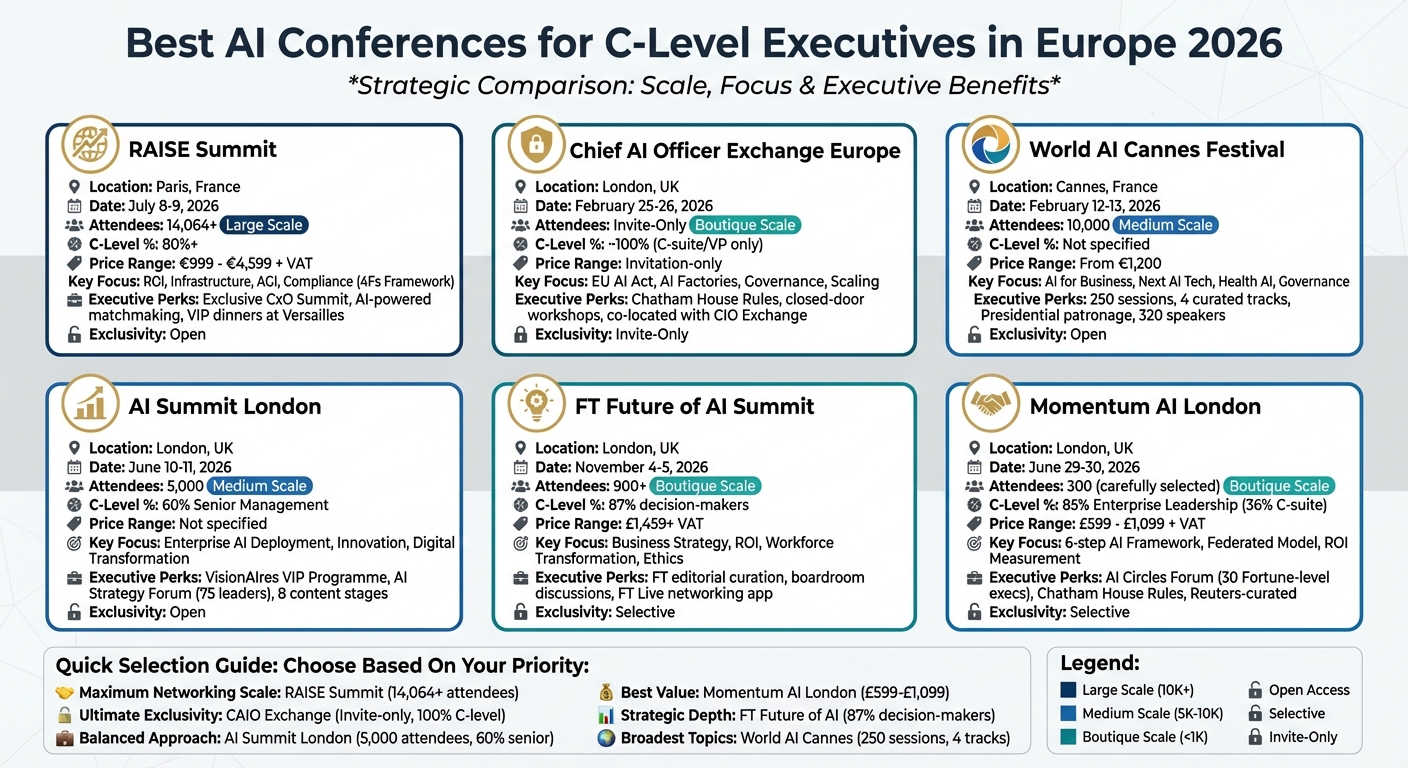
Europe's Top 6 AI Conferences for C-Level Executives 2026: Comparison Guide
1. RAISE Summit
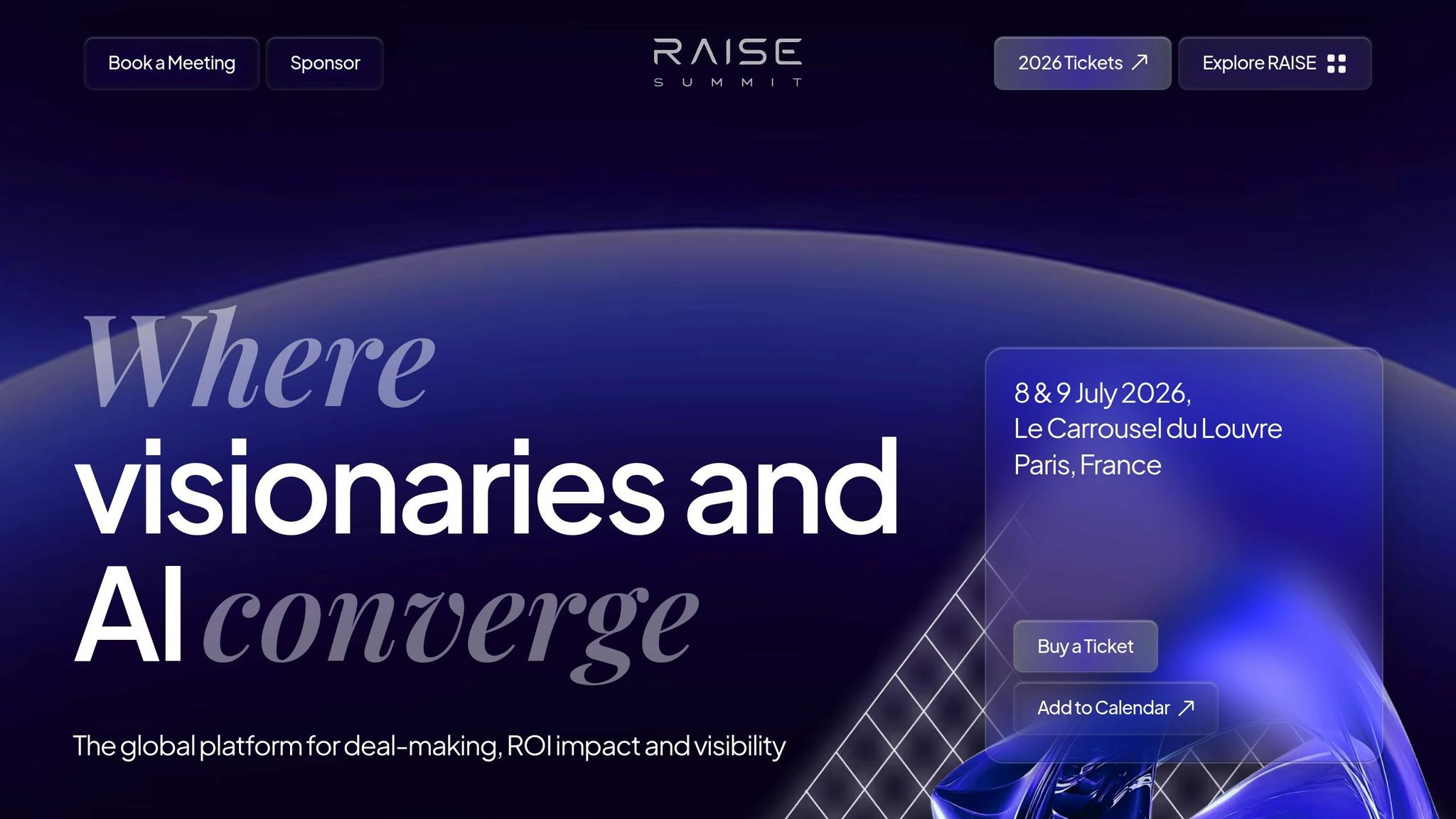
Scheduled for 8–9 July 2026 at Le Carrousel du Louvre in Paris, the RAISE Summit brands itself as "The Annual Board Meeting for Global AI." This event is not about passive learning; it’s tailored for executives ready to turn AI ambitions into measurable business results. With more than 80% of its 9,000+ attendees being C-level executives and Founders, the summit boasts an unparalleled concentration of decision-makers [3][4]. Its structure is purpose-built to address the unique challenges faced by top-level leaders.
C-level focus and tailored content
The summit’s agenda is anchored by the 4Fs framework: Foundation (infrastructure and capital), Frontier (applications), Friction (ROI and compliance), and Future (AGI and long-term vision) [3]. These themes tackle the pressing issues C-suite leaders contend with, such as managing the Energy-Compute Nexus or scaling agentic systems. For those seeking even more exclusive discussions, the CxO Summit provides a private forum for Fortune 1000 leaders to explore organisational intelligence strategies away from the public eye [4].
Networking opportunities and exclusivity
RAISE Summit takes networking to the next level with meticulously planned events. High-profile gatherings like the Versailles VIP Dinner and A Royal Dinner are designed to foster meaningful connections that lead to tangible business outcomes [4][7]. An AI-powered matchmaking platform also facilitates pre-arranged one-on-one meetings, ensuring networking translates into actionable partnerships and enterprise-level projects [1]. Highlighting its impact, Hadrien de Cournon, Co-Founder of RAISE Summit, stated:
"The CxO Summit exists so companies don't just talk about AI, they leave RAISE with real partnerships, pilots, and signed deals" [1].
The 2025 edition hosted 822 CEOs from 168 Fortune 500 companies, alongside investors managing assets exceeding $600 billion [1].
Keynote speakers and industry leaders
The 2026 speaker lineup continues to deliver high-impact insights with names like Mark Cuban (Entrepreneur), Vlad Tenev (CEO, Robinhood), Pat Gelsinger (GP, PlayGround Global), Olivier Pomel (CEO, Datadog), and Charlie Kawwas (President, Broadcom) [3][4]. These speakers address strategies for scaling AI in practical, actionable ways. Eric Schmidt, former CEO & Chairman of Google, described it as "the fastest-growing AI Tech conference in Europe, and maybe in history" [3].
Alignment with regulatory and strategic trends
As Europe moves toward enforceable AI regulations, the summit’s sessions align with these shifts, offering executives tools to turn compliance into a strategic advantage. Topics include sovereign AI infrastructure, trusted cloud solutions, and addressing the ROI Dilemma - helping leaders innovate while navigating governance [3]. Additionally, the event introduces the MACHINA Summit on 7 July 2026, marking Europe’s first conference dedicated to physical AI and robotics, underscoring the industry’s evolution toward autonomous systems [7]. Ticket prices range from €999 to €4,599 + VAT, with VIP MAX access including perks like A Royal Dinner and exclusive VIP lounge access [7].
sbb-itb-e314c3b
2. Chief AI Officer Exchange Europe
Scheduled for 25–26 February 2026 in London, the Chief AI Officer Exchange Europe is an exclusive, invite-only event tailored for C-suite and VP-level AI strategists. This closed-door gathering fosters open, peer-to-peer discussions under Chatham House Rules, creating a space for senior leaders to share both challenges and successes. Here's how the event's structure, networking opportunities, and expert-led sessions are designed to drive strategic AI initiatives.
C-level Focus and Customised Content
The 2026 programme, titled "Mission 2026," focuses on scaling AI initiatives into fully operational "AI Factories." Key themes include implementing the EU AI and Data Acts, advancing agentic systems, and delivering measurable ROI within months. A highlight is Morten Lantow, Operations Head of Machine Learning at DSV, sharing how his organisation expanded its AI team from 25 to over 85 professionals while standardising its operating model. Additionally, the event is co-located with the CIO Exchange, offering AI leaders a chance to align their strategies with broader IT transformation efforts.
Exclusive Networking Opportunities
This event is designed to bring together an elite group of attendees, carefully selected based on their roles and strategic responsibilities. The agenda includes interactive workshops and pre-arranged one-on-one meetings with solution providers, enabling participants to build actionable partnerships. The exclusivity of the event ensures that discussions remain focused and relevant, fostering meaningful connections among top-tier executives.
Industry Leaders and Keynote Speakers
The event features an impressive lineup of speakers from leading organisations like Standard Chartered, UBS, Bosch Group, Bayer, BT Group, and Novo Nordisk. Notable names include Emily Yang (Head of HC AI and Innovation, Standard Chartered), Debmalya Biswas (Executive Director – AI CoE Lead, UBS), and Francisco Luis Machín Aragonés (Chief Data & Analytics Officer, IE University). These sessions aim to provide practical strategies for turning governance into a competitive advantage and aligning cutting-edge technology with boardroom priorities.
Addressing Regulatory and Strategic Challenges
The event also focuses on navigating the complex regulatory landscape, particularly the EU AI Act and Data Act. Attendees will explore how to use compliance as a strategic asset, moving away from unregulated innovation toward secure, platform-level governance. The shift toward agentic AI systems and a governance-first approach is central to the discussions. As noted by the Chief AI Officer Exchange Europe:
"In 2026, leaders will gather at our zero-media and invite-only Chief AI Officer Exchange, where they will challenge each other, share best practices, and uncover the strategies that turn complexity into a competitive advantage."
The event will take place at The Minster Building in London, offering a fitting venue for this high-level exchange.
3. World AI Cannes Festival
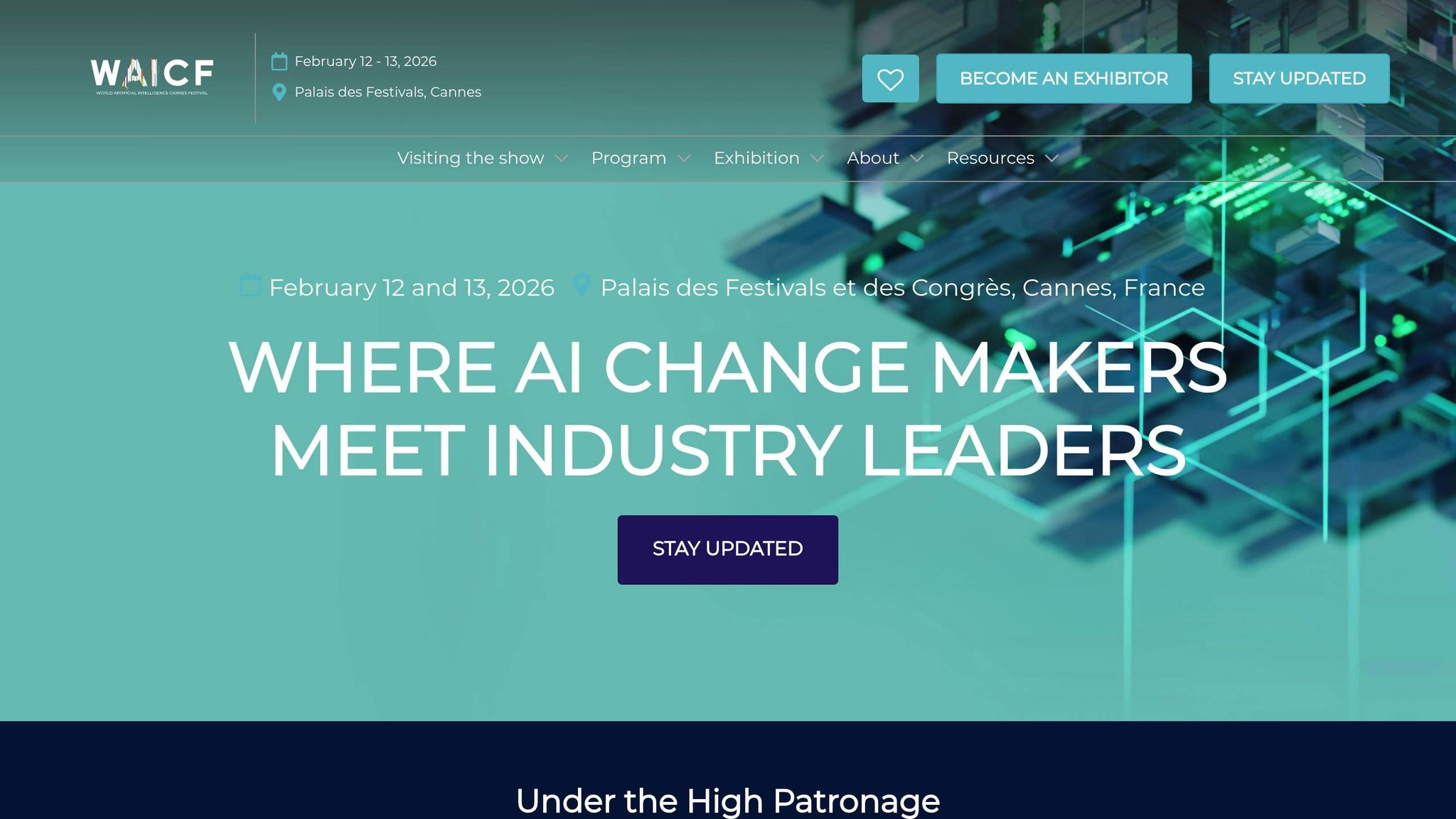
The World AI Cannes Festival is set to return for its fifth edition on 12–13 February 2026 at the Palais des Festivals et des Congrès in Cannes. This prestigious event, held under the High Patronage of President Emmanuel Macron, is expected to draw 10,000 attendees, 320 speakers, and 220 exhibitors. With ticket prices starting at €1,200, the festival promises an exclusive experience designed to make a tangible difference in shaping executives' AI strategies. The event revolves around four carefully curated tracks aimed at addressing the key needs of decision-makers.
C-level Focus and Tailored Content
The festival offers 250 sessions across four main tracks: AI for Business, Next AI Tech, Health AI Summit, and AI Governance. These tracks are crafted to help executives tackle challenges like scaling AI projects, staying ahead of technological advancements, and navigating complex regulatory landscapes.
- The AI for Business track focuses on guiding organisations from Proof of Concept to production, with an emphasis on maximising ROI and exploring practical applications of AI.
- The Next AI Tech track dives into cutting-edge technologies like Agentic AI, Quantum Computing, and Large Language Models, providing leaders with a roadmap to prepare for the future.
Organisers highlight that the agenda caters to both AI veterans and newcomers, offering insights into early, impactful applications while charting a course for emerging innovations [8][9]. These tracks are designed to deliver actionable insights from some of the most influential voices in the field.
Keynote Speakers and Industry Leaders
The 2026 festival boasts an impressive lineup of industry heavyweights and government officials. Speakers include Daniel Hulme (Chief AI Officer, WPP), Yann LeCun (Founder & Executive Chairman, AMI Labs), Francesca Rossi (AI Ethics Global Leader, IBM), and Janine Chamberlin (Head of UK, LinkedIn). High-level government representatives such as Anne Le Henanff (Minister Delegate for AI, France) and Dr Kristina Kallas (Minister of Education and Research, Estonia) will also share their perspectives on national AI strategies and policies. The Health AI Summit track, meanwhile, offers focused discussions on advancements like drug discovery and imaging tools, tailored for healthcare executives.
Alignment with Regulatory and Strategic Trends
The AI Governance track takes a deep dive into ethics, the EU AI Act, and transparency mandates. A key moment of the 2026 festival will be the signing of the "Cannes Declaration on the Sovereignty of the Mind", led by experts like Brando Benifei (Member of the European Parliament) and Francesca Rossi. This declaration calls on global regulators to safeguard human autonomy against manipulative AI systems. The festival underscores a shift in focus from mere "AI hype" to practical deployment and scaling, with governance positioned as the cornerstone of trust and sustainable progress, rather than just a compliance requirement [10][11].
4. The AI Summit London
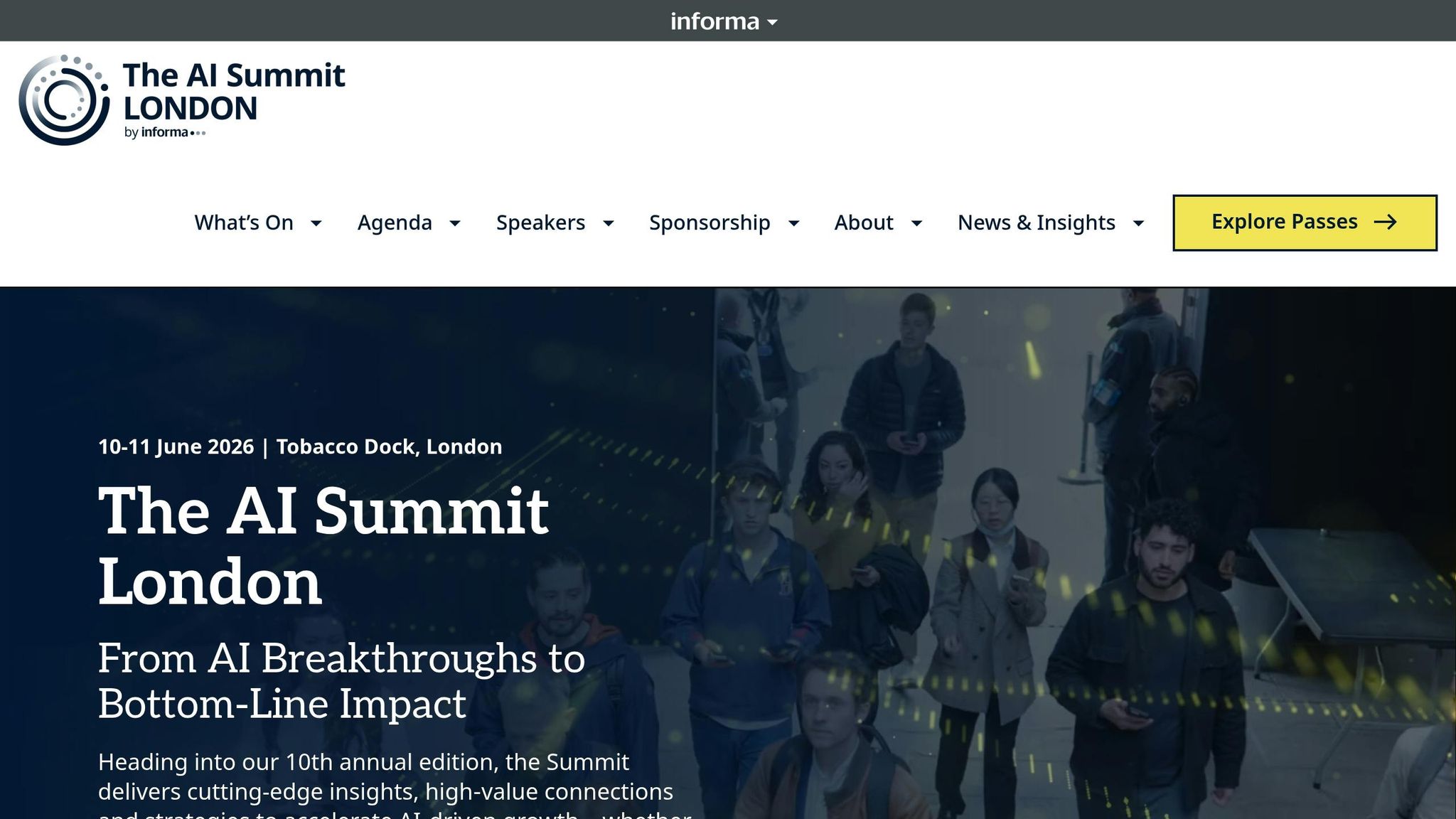
The AI Summit London is set to make its return for its 10th annual edition on 10–11 June 2026 at Tobacco Dock. This premier event, part of London Tech Week, brings together 5,000 attendees and 300 speakers, focusing on turning AI from experimental projects into measurable business outcomes. The agenda is shaped by an Ambassador Chapter featuring top leaders from Mastercard, Vodafone, EY, IBM, AstraZeneca, and the London Stock Exchange Group. With this guidance, the summit aims to stay "light‑years ahead of the curve" [12], making it a key event for C-level executives looking to transform AI into a competitive edge.
C-level Focus and Tailored Content
Designed for senior executives, the summit blends practical strategies with opportunities for high-level networking. Across eight content stages, including five premium-access tracks, attendees can explore topics tailored to their leadership roles. The VisionAIres VIP Programme, exclusive to Directors and above, offers curated workshops, roundtables, and strategic discussions aimed at driving decision-making and business growth [14]. Another highlight, the Beyond AI at Scale Stage, dedicates two days to scaling AI projects, focusing on strategies for growth, governance, and achieving measurable ROI [13]. Industry-specific tracks for Finance and Industrial AI address unique challenges in these sectors, while the Masterclass & Workshop Programme provides hands-on sessions for technology leaders to implement transformative solutions [14].
Networking Opportunities and Exclusivity
The summit offers a range of networking formats to foster meaningful connections. One standout is the AI Strategy Forum, an invitation-only event on 8 June 2026, limited to 75 senior enterprise technology leaders. This exclusive session allows CxOs to exchange insights on structuring, governing, and scaling AI strategies in large organisations [15]. For general attendees, the Networking Café facilitates one-on-one meetings through app-matched scheduling, while the VIP Village provides private roundtables for in-depth discussions on regulatory and strategic challenges [15].
Keynote Speakers and Industry Leaders
The Headliners Stage features thought leaders from global organisations like AstraZeneca, Rolls‑Royce, and government representatives from the UK and US [14]. Members of the Ambassador Chapter include notable figures such as Mara Pometti (Vice President, Agentic Experience Strategy, Mastercard), Matthew Candy (Global Managing Partner, Strategy & Transformation, IBM), Lawrence Ampofo (AI Practice Lead, Vodafone), and Nipun Jain (Senior Director of Innovation & Partnerships, AstraZeneca) [16]. Reflecting on the event, Anna Dillon, Senior Project Manager at easyJet, shared:
"It was great to see the demos and hearing from different companies and industries on their experience so far with AI, the importance of regulations, principles and standards along with communication, trust and connection" [12].
Alignment with Regulatory and Strategic Trends
The summit also tackles critical topics like governance and ROI, equipping leaders with tools to navigate shifting regulatory landscapes. Sessions led by Heads of Policy and Chief Privacy & Data Responsibility Officers delve into the UK Government's AI strategy and how to align data platforms with governance requirements [15]. With a focus on integrating Generative AI into enterprise systems, the event highlights the importance of balancing innovation with security and reliability [15]. This approach reframes AI as a strategic priority at the board level, ensuring decision rights are clearly defined and aligned with organisational goals [15].
5. FT Future of AI Summit
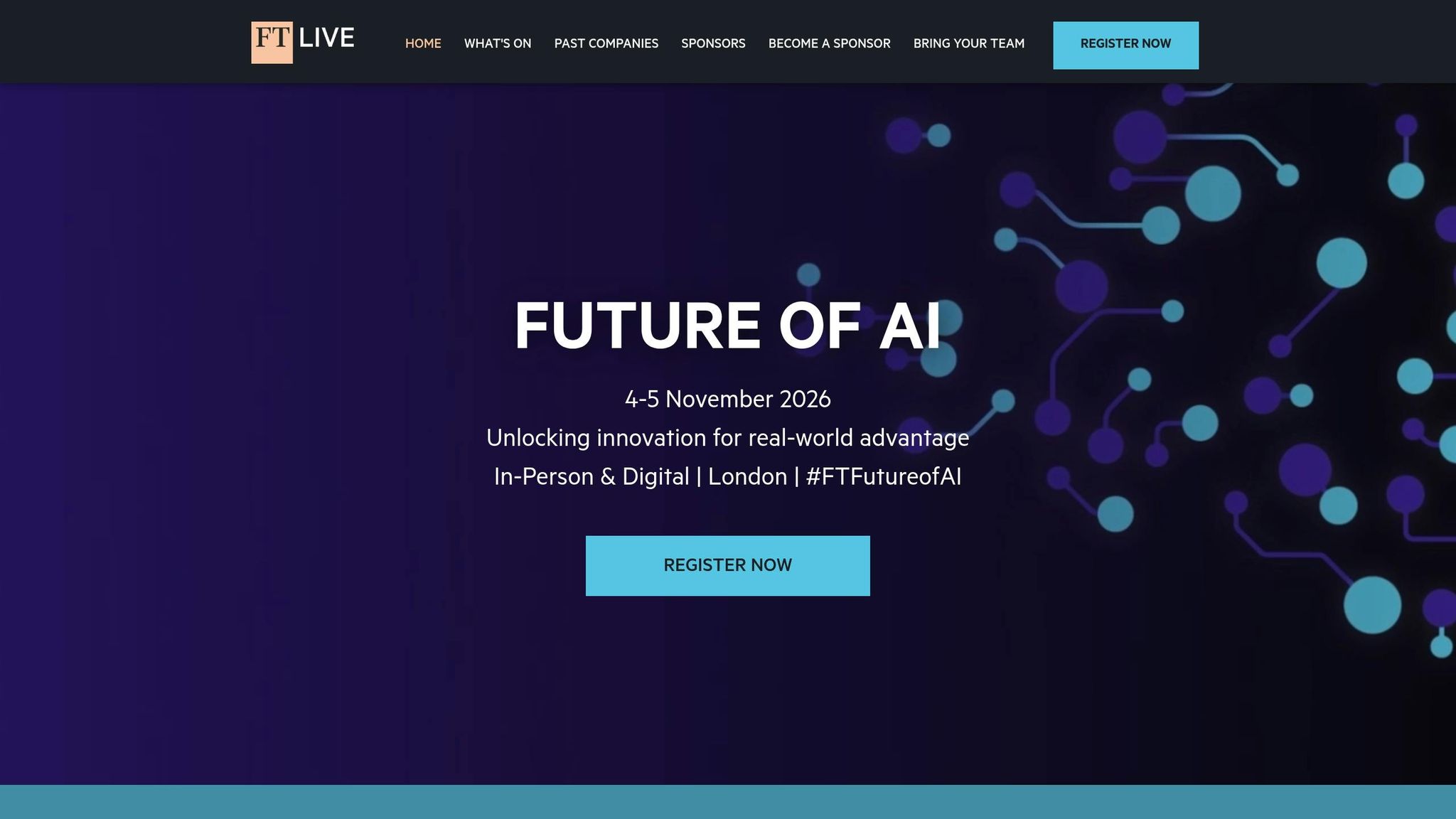
The FT Future of AI Summit, set to take place on 4–5 November 2026 in London, is expected to bring together over 900 attendees and more than 100 speakers. This event primarily targets senior decision-makers, with 87% of participants being at the decision-making level [17][5]. The summit is designed for leaders such as CEOs, CTOs, CIOs, and Chief Data Officers who are transitioning from initial AI adoption to fully integrating AI into their organisations. Curated by the Financial Times' AI editorial team, led by Madhumita Murgia [18], the programme focuses on transforming AI into measurable business value rather than delving into purely technical research. Super Early Bird In-Person Passes are priced at £1,459 + VAT (standard price £2,729), while Digital Passes are available for £219 + VAT [17].
C-level Focus and Tailored Content
The summit zeroes in on critical challenges like scaling AI investments, maximising returns, and reshaping workforces. Discussions will revolve around themes such as achieving ROI from AI, identifying high-impact use cases, and measuring the effectiveness of AI initiatives [17]. Attendees will also explore emerging technologies, including agentic systems, generative AI, edge computing, and physical AI, and their potential to transform business operations. Designed for organisations in the integration phase of AI, the event provides leaders with actionable insights on strategic scaling and governance frameworks, complemented by exclusive networking opportunities.
Networking Opportunities and Exclusivity
With a carefully curated attendee list of around 900 participants from over 22 countries, the summit provides a unique platform for peer-to-peer exchanges among C-suite executives [17][5]. Networking opportunities abound, with more than 600 delegates, speakers, and sponsors engaging in breaks, lunches, and VIP drinks. The FT Live networking app further enhances these interactions, enabling participants to connect and even initiate business deals. Professional and VIP ticket holders gain additional access to exclusive networking tools and the event’s community.
Keynote Speakers and Industry Leaders
The summit boasts an impressive lineup of speakers, featuring AI trailblazers like Geoffrey Hinton, Yoshua Bengio, and Yann LeCun (VP & Chief AI Scientist, Meta). Industry leaders such as Jensen Huang (Founder & CEO, Nvidia) and Bill Dally (Chief Scientist, Nvidia) will also share their expertise [17][19]. Fei-Fei Li from the Stanford Human-Centered AI Institute will provide academic insights, while strategic and policy perspectives will come from Amandeep Singh Gill (UN Under-Secretary-General) and Guillaume Princen (Head of EMEA, Anthropic). Other notable speakers include Sir Tim Berners-Lee (Inventor of the Web; CTO, Inrupt) and Helen King (VP of Responsibility, Google DeepMind), ensuring a comprehensive exploration of technical innovation, ethics, and business strategies.
Alignment with Regulatory and Strategic Trends
The summit will address pressing issues like navigating the EU AI Act and other emerging global regulations while maintaining competitive advantages [17][21]. Sessions will guide attendees on building governance frameworks that align with evolving standards, with a particular focus on agentic systems and digital sovereignty. Additionally, discussions will highlight impactful use cases for creating a future-ready infrastructure capable of delivering reliable, auditable outcomes [20]. Extending the summit’s value, the FT AI Forum offers year-round access to exclusive reports and thought leadership, ensuring ongoing support for technology decision-makers.
6. Momentum AI London
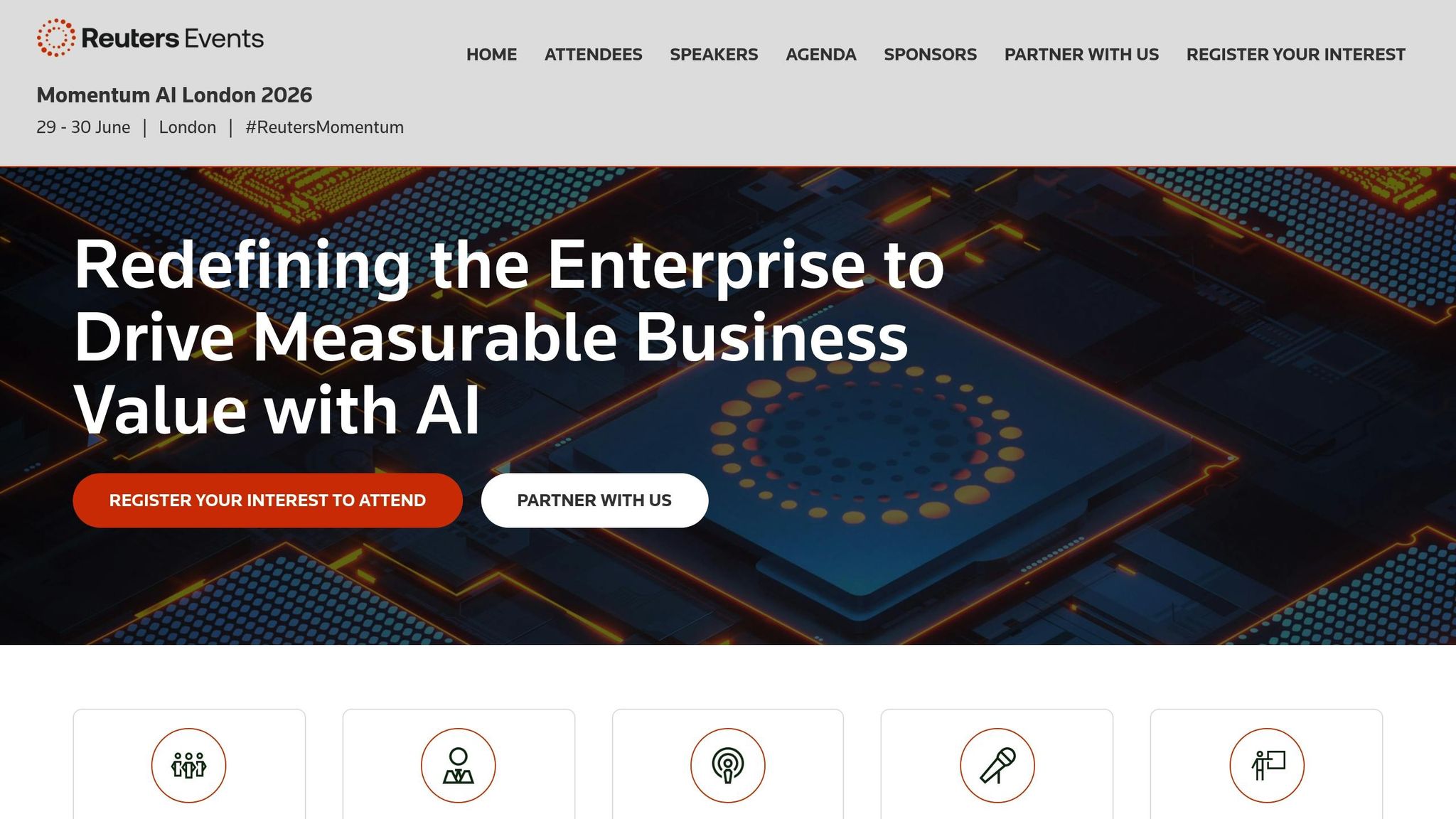
Momentum AI London will take place on 29–30 June 2026 at 5 Canada Square in Canary Wharf. This exclusive event is limited to 300 carefully selected participants, with 85% representing enterprise leadership and 36% holding C-suite roles [22][6]. Ticket prices range from £599 (Earlybird) to £1,099 (Standard) for corporate in-house executives, while solution providers pay between £3,099 and £3,999 [24]. The event is curated by senior Reuters journalists, who lead interviews and challenge industry leaders live on stage [22]. Below, we’ll explore its tailored agenda, unique networking opportunities, and high-profile speakers.
C-level Focus and Tailored Content
The conference follows a strategic six-step framework, addressing key areas like maturity benchmarking, leadership alignment, cultural readiness, scalability, governance, and ROI [22]. Each speaker commits to delivering an "Actionable Speaker Pledge", offering one tangible outcome and one actionable next step [22]. Dr. Athina Kanioura, Chief Strategy & Transformation Officer at PepsiCo, shared her enthusiasm:
"Wow, what an excellent experience! This is a defining moment for #AI, and an extraordinary time to be a digital leader. Thank you to the incredible Reuters team for organising such critical discussions." [22]
The agenda reflects a shift from isolated AI initiatives to a Federated Model, where cross-functional governance ensures that every CxO plays a role in AI success [22][23]. This structured approach seamlessly integrates with the event’s exclusive networking opportunities.
Networking Opportunities and Exclusivity
One of the standout features is the AI Circles Forum, a private, closed-door strategy session under Chatham House Rules. This forum is reserved for 30 Fortune-level C-suite attendees, offering a confidential space to discuss scaling AI with trust and measurable ROI [22]. Other interactive formats include "The AI Clinic", which focuses on addressing specific challenges, and "Strategic Hackathons", designed to provide actionable insights [22][23]. A Chief Customer Officer from Customertimes remarked:
"One of the most impressive line-up of speakers I've come across in decades for a conference of this size. Great takeaways and fruitful networking opportunities." [22]
Keynote Speakers and Industry Leaders
The event boasts an impressive roster of speakers, including George Mudie (CTO & CISO), Scott Marcar (CIO), Opal Perry (Chief Data and Technology Officer), Jasmeet Narang (Chief Transformation, Data and AI Officer), and Leigh-Ann Russell (CIO, Bank of New York Mellon) [22]. Derek Waldron, Chief Analytics Officer at JPMorgan Chase, will join executive panels to discuss the "Build vs. Buy" dilemma in AI deployment, offering practical decision-making frameworks for large-scale institutions [25]. Attendees can expect insights from over 50 speakers and participate in 5 interactive workshops [22]. Case studies like Spotify’s "The Algorithm of Retention" will also be featured, showcasing how AI foundations can enhance customer lifetime value [23].
Alignment with Regulatory and Strategic Trends
Momentum AI London is set to redefine the AI landscape in 2026 by focusing on measurable outcomes rather than speculative investments [22][6]. A private workshop will delve into the EU AI Act, UK AI Regulation, and Global Liability Roadmap, shifting from risk frameworks to robust vendor contracts [23]. Sessions will demonstrate how compliance can become a competitive advantage through "Governance by Principle" [22]. Additionally, executives will learn strategies for scaling Generative and Agentic AI across critical enterprise workflows [22]. This alignment of governance with execution solidifies Momentum AI London as an essential event for forward-thinking C-suite leaders.
Conference Comparison Table
Here's a quick breakdown of the key metrics and benefits of each event, designed to help executives match their strategic priorities - whether that's investment decisions, networking opportunities, or staying ahead of regulatory changes.
| Conference | Number of Attendees | % C-Level/Founders | Main Topics | Location | Executive Benefits |
|---|---|---|---|---|---|
| RAISE Summit | 14,064+ [3] | 80%+ [3][4] | ROI, Infrastructure, AGI, Compliance (4Fs Framework) [3] | Paris, France | Exclusive CxO Summit, AI-powered networking, private lounges [4]. Pricing: €999 (PRO) to €3,499 (VIP MAX) + VAT [7] |
| CAIO Exchange Europe | Invite-Only [2] | ~100% (C-level/VP) [2] | EU AI Act, AI Factories, Governance, Scaling Responsible AI [2] | London, UK | Closed-door workshops, co-located with CIO Exchange [2]. Invitation-only pricing |
| World AI Cannes Festival | 10,000 | Not specified | AI for Business, Next AI Tech, Health AI, AI Governance | Cannes, France | Four curated tracks, 250 sessions, under the High Patronage of President Macron. Pricing: from €1,200 |
| The AI Summit London | 5,000 | 60% Senior Management | Enterprise AI Deployment, Innovation, Digital Transformation | London, UK | VisionAIres VIP Programme, AI Strategy Forum (75 senior leaders), dedicated C-suite track |
| FT Future of AI Summit | 900+ | 87% decision-making level [17][5] | Business Strategy, ROI, Workforce Transformation, Ethics, Policy | London, UK | Financial Times editorial curation, boardroom-level discussions, FT Live networking app. Pricing: £1,459 + VAT (Super Early Bird) [17] |
| Momentum AI London | 300 [22] | 85% Enterprise Leadership (36% C-suite) [22] | Six-step AI Framework, Federated Model, ROI Measurement [22] | London, UK | AI Circles Forum (30 Fortune-level executives), Chatham House Rules sessions, Reuters-curated content [22]. Pricing: £599–£1,099 + VAT (corporate) [24] |
RAISE Summit shines for its massive scale and high-level attendance, drawing over 14,000 participants with more than 80% being C-level executives [3][4]. For those seeking more private and focused discussions, Momentum AI London keeps things intimate, capping attendance at 300 and offering exclusive access to 30 Fortune-level leaders through its AI Circles Forum [22]. On the other hand, CAIO Exchange Europe ensures a confidential, zero-media environment, where all attendees are at the C-level or VP level [2].
This comparison helps executives zero in on the event that best fits their goals and priorities.
Conclusion
Align your strategic goals with the specific benefits each event offers. For example, if forming meaningful partnerships is a priority, target summits where at least 80% of attendees are senior decision-makers [1]. On the other hand, if navigating regulatory challenges like the EU AI Act is critical, focus on events featuring input from regulatory bodies and sessions dedicated to governance [5].
As AI becomes a standard across industries, the conversation shifts from exploring possibilities to achieving practical results. Executives are now focused on proving ROI, scaling pilot projects, and ensuring departments work together effectively [3]. Events that include closed-door discussions, peer exchanges tailored to specific roles, and AI strategy workshops can provide actionable tools to support this transition [4]. These resources are essential for making informed, strategic decisions.
Instead of spreading your efforts thin, concentrate on two or three events that align with your immediate needs - whether that’s attracting investment, addressing regulatory demands, or rethinking workforce strategies [5]. Bringing along a diverse team can also strengthen alignment, as AI now impacts nearly every facet of business operations. For C-suite leaders, events that combine strategic vision with practical insights are especially valuable.
In 2024, European AI companies attracted over US$13 billion (around €12,3 billion) in funding, marking a 22% rise [26]. This surge highlights Europe's dedication to building independent infrastructure and ethical frameworks, laying the groundwork for sustained progress. For today’s executives, this focus on measurable outcomes and governance reinforces AI’s growing importance.
As Eric Schmidt aptly put it, "the fastest-growing AI Tech conference in Europe, and maybe in history" [3]. The real question isn’t whether to attend, but which events will deliver the partnerships, insights, and clarity your business needs to succeed.
FAQs
Which 2–3 conferences should I prioritise for my 2026 AI goals?
For your 2026 AI objectives, make the RAISE Summit in Paris (8–9 July 2026) a top priority. This event offers strategic insights and exclusive networking opportunities for high-level decision-makers. Another key event to consider is the Brussels AI Summit in April 2026, which centers on the intersection of policy and business integration. Both gatherings are designed for C-level executives, presenting a chance to align AI advancements with your business strategies effectively.
How can I measure ROI from attending an AI conference?
To evaluate the return on investment (ROI) from attending an AI conference like RAISE Summit, focus on tangible results such as new deals, increased visibility, and meaningful partnerships. Keep track of key outcomes like high-value connections established, potential business opportunities initiated, and how keynote insights influenced your AI strategy.
It's helpful to set clear goals before the event - like specific connections you aim to make - and then review post-event results. Look at follow-up meetings, interactions with decision-makers, or other engagement metrics to see how well your objectives were met.
What should I bring back to the board on the EU AI Act?
The EU AI Act is a groundbreaking legislative framework aimed at regulating artificial intelligence within the European Union. It sets out clear compliance requirements for organisations developing or deploying AI systems, with a strong focus on accountability, transparency, and ethical practices. For executives, understanding these requirements isn’t just about avoiding penalties - it’s about positioning their organisations as leaders in responsible AI innovation.
Compliance Requirements: What You Need to Know
The Act classifies AI systems into risk categories - unacceptable risk, high risk, and limited or minimal risk. Each category comes with specific obligations:
- High-risk AI systems: These face the most stringent rules. Examples include AI used in critical sectors like healthcare, finance, or law enforcement. Organisations must ensure these systems meet requirements for transparency, data governance, and human oversight.
- Transparency obligations: For AI systems interacting with humans (like chatbots), users must be informed they are engaging with AI.
- Prohibited practices: Certain uses of AI, such as social scoring by governments or manipulative practices exploiting vulnerabilities, are outright banned.
Failing to meet these requirements could lead to severe financial penalties - up to €30 million or 6% of global annual turnover, whichever is higher.
Strategies for Demonstrating Responsible AI Practices
Compliance goes beyond ticking boxes. To align with the EU AI Act, organisations should adopt a proactive approach:
- Establish internal governance frameworks: Set up dedicated AI ethics committees or task forces to oversee compliance.
- Conduct regular audits: Regularly evaluate AI systems for bias, fairness, and adherence to legal standards.
- Document processes: Maintain detailed records of AI system development and deployment to demonstrate accountability during audits.
- Invest in employee training: Ensure teams understand the ethical and legal implications of AI.
By embedding these practices into their operations, organisations can not only meet regulatory demands but also build a culture of trust and responsibility.
Avoiding Legal Penalties: Key Takeaways
To mitigate risks, executives should prioritise the following:
- Risk assessment: Identify which AI systems fall under high-risk categories and address compliance gaps immediately.
- Engage with legal experts: Collaborate with legal advisors familiar with the EU AI Act to stay ahead of regulatory changes.
- Leverage third-party certifications: Seek certifications or assessments from recognised bodies to validate compliance efforts.
Strategic Impact on AI Governance and Stakeholder Trust
The EU AI Act isn’t just a regulatory hurdle - it’s an opportunity to reshape AI governance. By aligning with the Act, organisations can demonstrate their commitment to ethical AI, strengthening relationships with customers, investors, and regulators. Transparent and responsible AI practices can also serve as a competitive advantage, especially in markets where trust is a deciding factor.
For executives, the Act underscores the importance of integrating AI governance into broader organisational strategies. It’s not just about avoiding fines - it’s about fostering long-term trust and aligning with global trends in AI regulation. By taking action now, organisations can position themselves as pioneers in ethical AI, setting the stage for sustainable growth in an increasingly regulated environment.