

When deciding between attending a major AI summit or multiple smaller conferences, the choice depends on your career goals, budget, and learning preferences. Here's a quick summary:
- Major AI Summits: Perfect for broad networking, spotting trends, and meeting industry leaders. These events attract thousands of attendees, offer high-profile speakers, and focus on large-scale partnerships. However, they can be expensive (€1,500–€5,000+), overwhelming, and time-consuming.
- Smaller AI Conferences: Better for focused learning, in-depth discussions, and building close professional connections. These events are more affordable (€600–€1,200), easier to navigate, and tailored to specific fields. However, they can lack the broader perspective of large summits and may require attending multiple events to cover diverse topics.
Quick Comparison
| Factor | Major AI Summits | Smaller AI Conferences |
|---|---|---|
| Attendees | 5,000–250,000+ | A few hundred |
| Cost | €1,500–€5,000+ | €600–€1,200 |
| Networking | Broad, industry-wide | Personal, niche-focused |
| Content | Diverse topics | Specific, technical subjects |
| Access to Experts | Limited, VIP-focused | Easier, direct interactions |
For the best results, consider a hybrid approach: attend one major summit annually for high-level insights and supplement it with 2–3 smaller, specialized conferences for targeted learning and connections. Tailor your strategy to your career stage, budget, and professional needs.

Major AI Summits vs Smaller Conferences: Complete Comparison Guide
One Major AI Summit: Pros and Cons
Advantages of Major AI Summits
Big AI summits bring a unique edge: direct access to top decision-makers. For instance, at the RAISE Summit, over 80% of attendees are C-level executives or founders [5]. It's not just about the numbers - it’s about the quality of discussions you can have when surrounded by people shaping the future of AI.
These events go beyond casual networking. They focus on "high-density deal-making", creating opportunities for partnerships that directly impact AI strategies. The upcoming RAISE Summit 2026, set for 8–9 July at Le Carrousel du Louvre in Paris, expects over 9,000 attendees, representing 2,000+ companies and featuring more than 350 speakers [5]. The speaker lineup includes influential figures like Mark Cuban, Vlad Tenev (CEO of Robinhood), Charlie Kawwas (President of Broadcom), and Pat Gelsinger (GP of PlayGround Global and former Intel CEO) [5].
"RAISE is the room to be in where direction is set and long-term advantage and relationships are formed" [5].
In addition to its core program, the summit offers specialized sub-events designed to foster strategic partnerships. These include exclusive CxO forums, startup competitions, and intimate VIP dinners with industry leaders [5]. The week also features the MACHINA Summit on 7 July, which focuses on AI in robotics, and a 24-hour hackathon for prototyping AI solutions [5].
What truly sets these summits apart is their ability to bring together key players across capital, technology, and policy in one place [5]. This creates a collaborative environment where builders, investors, and policymakers can interact, breaking free from isolated ecosystems. However, the scale of such events also introduces some challenges.
Disadvantages of Large-Scale Events
While the scale of major summits is their strength, it also presents hurdles. With thousands of attendees, forming meaningful connections can be a challenge, and valuable insights often get buried in the crowd. Alexandru Stan, CEO of TNW, highlights this issue:
"At scale, everything becomes superficial by default. Conversations shorten. Access disappears. The signal is drowned by the format itself" [6].
There's also a psychological threshold for tech events - once attendance surpasses 1,000 participants, maintaining quality becomes increasingly difficult [6].
Cost is another significant factor. At RAISE Summit, a PRO pass costs €999 (excluding VAT), while the VIP MAX experience goes up to €3,499 [5]. Add travel expenses and time away from work, and the financial burden can be significant, especially for professionals with limited budgets or personal commitments [7]. Moreover, large summits sometimes struggle to keep up with the latest AI trends, as packed agendas can leave little room for updates [7].
The intense schedule can also be draining. Some attendees report that these events often cram too much into the agenda, leaving little breathing room to fully engage with all the topics [7].
Case Study: RAISE Summit
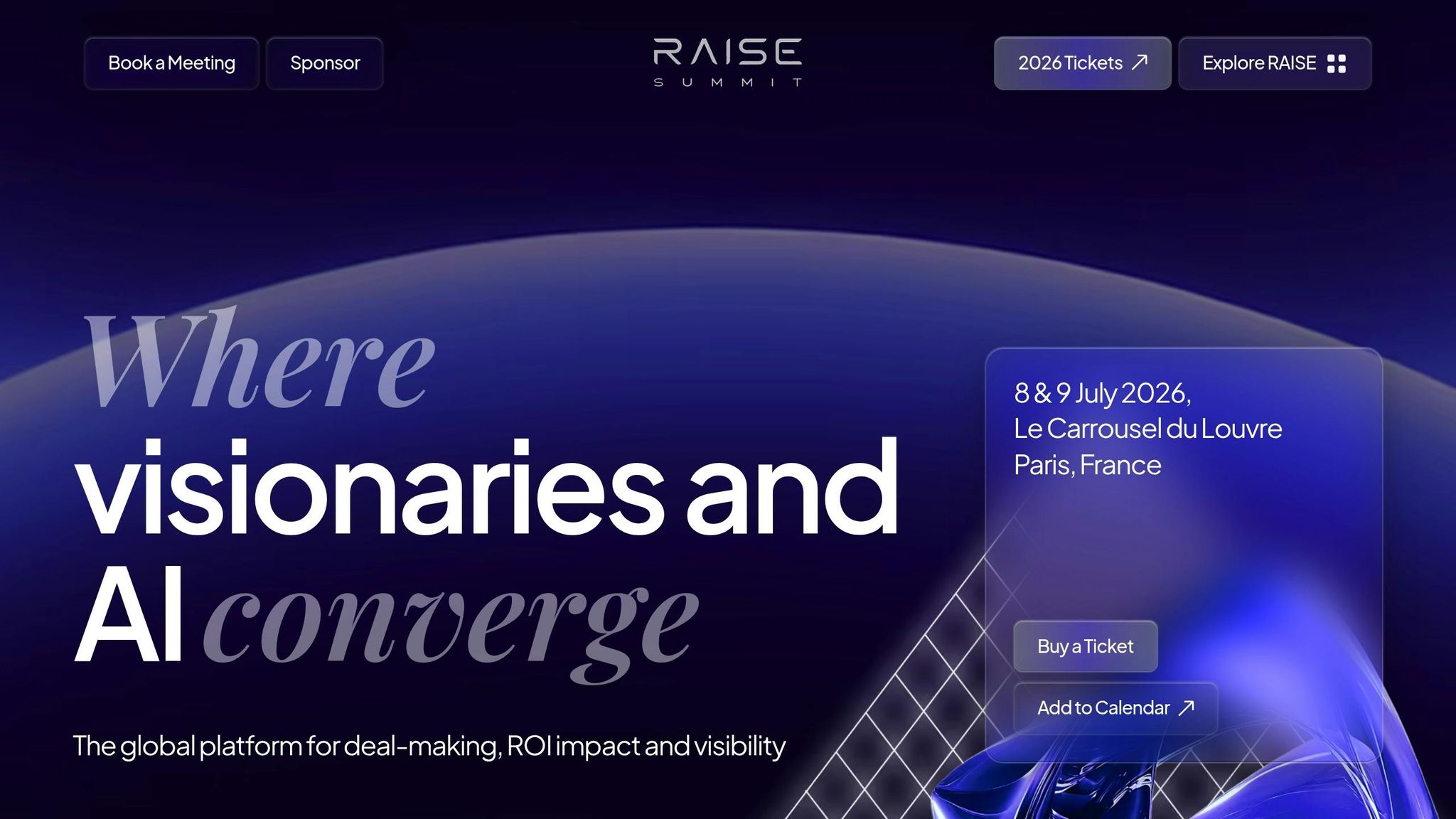
RAISE Summit serves as a prime example of both the benefits and challenges of major AI summits. Touted as "The Annual Board Meeting for Global AI" [5], it brings together leaders across capital, technology, and policy to drive AI's future. The 2026 edition highlights the scale and ambition typical of such events.
| Feature | RAISE Summit 2026 |
|---|---|
| Expected Attendance | 9,000+ [5] |
| Company Representation | 2,000+ [5] |
| Speaker Count | 350+ [5] |
| Audience Composition | >80% C-Levels & Founders [5] |
| Core Focus | Capital, Compute, and Policy Alignment [5] |
| Networking Style | High-density deal-making and intimate VIP experiences [5] |
The summit's pricing reflects its high-level audience, with tickets ranging from €599 for developers to €3,499 for VIP packages that include curated dinners and exclusive lounge access [5].
"Translate ambition into real-world outcomes with a focus on ROI and a palpable evolution of deals and pilot programs" [5].
RAISE Summit showcases how large-scale events can deliver focused expertise and strategic opportunities. It’s not just a showcase of AI technology - it’s a platform where regulatory changes, infrastructure investments, and commercial strategies intersect. For organizations aiming to lead rather than follow in AI's evolution, the investment in such a summit often pays off in long-term benefits.
sbb-itb-e314c3b
Multiple Smaller AI Conferences: Pros and Cons
Advantages of Smaller Conferences
When deciding between a large-scale summit and several smaller, niche-focused events, smaller conferences bring some distinct perks. One of the biggest draws is content relevance. At these events, nearly every session ties directly to your work, unlike major summits where only 20% of presentations are easy to follow, and just 10% feel engaging [3].
Networking at smaller gatherings also feels more genuine. Instead of quick, surface-level chats in crowded venues, you can engage in meaningful conversations, often in more personal settings like closed-room dinners. Julian Togelius, Associate Professor at NYU, puts it simply:
A conference with thousands of attendees does not provide community [3].
Vaishak Belle, Faculty in Artificial Intelligence at the University of Edinburgh, echoes this sentiment, highlighting the value of focused interactions:
The greater joy comes from picking apart the smaller pieces and inspecting them more closely. And this can happen when senior experts come to a paper and critique your way of thinking [8].
Another major plus? Cost savings. Smaller conferences are typically easier on the wallet, with registration fees significantly lower than those of industry mega-events [4] [9]. Companies are also shifting budgets toward regional events in less expensive cities - think Sacramento instead of San Francisco - allowing for more frequent, targeted gatherings throughout the year [9]. Liz Lathan, Founder of Club Ichi, explains:
It's not that budgets are shrinking - it's that they're being reallocated toward smaller, more targeted experiences [9].
This trend is becoming the norm, with 54% of event planners now reporting that most of their events host 250 attendees or fewer [9].
While these benefits make smaller conferences appealing, they do come with some challenges.
Disadvantages of Smaller Conferences
The biggest downside? Limited scope. While niche conferences keep you deeply informed within your specific area, they might leave you disconnected from broader industry trends or cross-disciplinary developments [3]. This narrower focus can make it harder to stay aware of innovations happening outside your immediate field.
Another challenge is logistical complexity. Attending multiple smaller events throughout the year means juggling repeated travel plans, hotel bookings, and managing different schedules and locations [7]. KellyAnn Fitzpatrick, Analyst at RedMonk, points out:
If ecosystem expos or formal training opportunities are your thing, a larger, centralised show might be a better time investment [7].
Access can also be an issue, especially for emerging professionals. Many smaller, high-value events are increasingly invite-only, which can exclude junior professionals or those not yet part of executive circles [6]. Alexandru Stan, CEO of TNW, sums it up:
Ten relevant people in a room will always create more value than a thousand irrelevant ones in a hall [6].
While this exclusivity can lead to richer outcomes for attendees, it makes it harder for newcomers to break into AI leadership networks. Balancing these factors is crucial when deciding how smaller conferences fit into your professional development strategy.
Direct Comparison: Major Summits vs. Smaller Conferences
Comparison Table: Key Differences
Here’s a breakdown of how major summits and smaller conferences differ across several important factors:
| Factor | Major AI Summits | Smaller AI Conferences |
|---|---|---|
| Attendee Scale | 5,000 to 250,000 participants [10][13] | Usually a few hundred attendees [12] |
| Registration Cost | €1,500 to €5,000+ for industry events [4] | €600 to €1,200 for academic or niche events [4] |
| Networking Focus | Broad industry partnerships, commercial deals, and lead generation [4] | Local collaboration, mentorship, and direct access to speakers [12] |
| Content Breadth | Covers diverse topics like ethics, governance, MLOps, and enterprise strategy [14] | Focuses deeply on specific technical challenges or regional priorities [12][14] |
| Access to Experts | Limited, often requiring VIP programmes or closed-door sessions [6][14] | Easier and more direct, with smaller settings encouraging candid discussions [6] |
| Trend Timing | Highlights mainstream topics ready for enterprise adoption [14] | Showcases early-stage innovations, often six months ahead of major events [14] |
| Interaction Style | Can feel overwhelming; AI-powered matchmaking tools assist in navigating connections [11] | Intimate environments that help build lasting professional relationships [12] |
This comparison highlights how the two formats cater to different professional goals and preferences.
Both major summits and smaller conferences bring value, but in distinct ways. Large-scale summits are perfect for building global partnerships and exploring broad industry trends [2]. On the other hand, smaller conferences shine when it comes to diving into specific technical problems and fostering close-knit collaborations [13]. Your decision should align with your career goals, budget, and the kind of learning experience you’re seeking.
The 2025 Guide to Machine Learning Conferences
How to Decide Which Approach Fits Your Needs
Picking between a major summit and smaller conferences depends on several factors - your career stage, budget, and what you aim to learn. Let’s take a closer look at how these elements can help you decide.
Your Career Stage and Professional Role
Where you are in your career plays a big role in determining which type of conference will benefit you the most. If you’re a PhD student or a junior researcher, large summits can be a great starting point. They offer foundational training through focused workshops, while smaller conferences often provide better opportunities to present your work, thanks to higher acceptance rates [16]. Smaller events also allow for more meaningful networking, which is especially useful if you’re just starting to build your professional connections.
For C-suite executives and senior leaders, the priorities shift. Major industry events are designed for high-level networking and often attract thousands of CEOs and policymakers. On the other hand, if you work in a specialised field - like cybersecurity or government - niche summits tailored to your sector might deliver more targeted insights and connections.
Budget and Time Availability
Your financial and time constraints are also key factors. Major summits often come with steep registration fees - some exceeding €4,000 - and may require international travel. In contrast, local or regional conferences are much easier on the wallet and far less time-consuming. For example, academic AI summits typically cost between €600 and €1,200, while major industry events range from €1,500 to over €5,000 [4].
Time is just as critical. Large summits often span several days and may involve significant travel, which can disrupt your projects or require extra coverage at work. As KellyAnn Fitzpatrick from RedMonk points out:
I am well aware of the cost differential of a short train ride and cross-country plane trip, and how these can factor into attendance decisions for technical practitioners with limited organisational travel support [7].
If your budget is tight, consider local options like Kubernetes Community Days or vendor-sponsored roadshows. These events can deliver valuable insights without the added expense of flights or extended stays [7]. Balancing these practical considerations with your career goals ensures you make the most of your conference experience.
Learning Goals and Industry Specialisation
Your learning objectives should steer your decision. Major summits are ideal for getting a broad overview of the AI landscape, covering topics like governance, safety, and innovation [18]. With hundreds of sessions and tens of thousands of attendees, these events provide a wide-angle view of the industry [15]. However, if your focus is on a specific subfield - like Reinforcement Learning or AI in Healthcare - you might find that most sessions at large conferences don’t align with your interests [3].
Smaller, niche events are better for deep dives into technical topics. They offer highly specialised feedback because the audience and reviewers are experts in that specific area [19]. For job seekers, attending prestigious major conferences can also boost your visibility with hiring committees in both academia and industry, making the investment worthwhile despite their broader scope [19].
Combining Both Approaches: A Hybrid Strategy
Why settle for just one approach when you can combine the best of both worlds? A hybrid strategy lets you leverage the broad insights of large summits while diving into the specific, technical discussions offered by smaller gatherings. This approach gives you a well-rounded perspective, balancing high-level networking with in-depth learning opportunities.
How to Implement a Hybrid Approach
A practical hybrid strategy might involve attending one major summit annually and supplementing it with two to three smaller, specialised events. For instance, you could join a major industry event like the RAISE Summit in Paris to connect with global leaders and spot overarching trends. Then, complement this with smaller, more focused workshops or regional meetups closer to home.
This combination ensures you address the "breadth and depth" of your professional development. As Isabella Wilkinson, Research Fellow at Chatham House, puts it:
Policy solutions…will not come from a crowded conference room. They will come from smaller expert or regional gatherings [13].
Smaller events can serve as testing grounds for ideas and solutions, which can later be scaled and presented at larger summits. This method allows you to refine your strategies in an intimate setting before showcasing them on a bigger stage.
Another smart tactic is tracking vendor roadshows. These smaller, regionally distributed events complement annual mega-conferences by offering frequent updates on rapidly changing technologies. KellyAnn Fitzpatrick, Analyst at RedMonk, highlights their value:
roadshows give an organization the ability to refine its content and messaging as the landscape changes over time [7].
This adaptability is crucial, especially in fast-evolving fields like AI, where agility can make all the difference. By attending these smaller events, you stay updated on the latest developments while expanding your professional network.
Benefits of a Mixed Strategy
A hybrid approach is not only effective but also cost-conscious. Many mid-sized and specialised conferences now offer free virtual attendance options, allowing you to stay informed without stretching your travel budget [17]. For in-person attendees, these events provide opportunities for meaningful face-to-face interactions while keeping costs manageable.
For junior researchers, this strategy can be a game-changer. Smaller conferences, with their higher acceptance rates and less intimidating environments, are ideal for presenting early work. These experiences can act as stepping stones to securing speaking slots at prestigious summits later in your career [16]. This progression aligns perfectly with career growth while keeping expenses in check.
Conclusion
Key Takeaways
Deciding between attending a major AI summit or smaller, niche conferences comes down to aligning the event's offerings with your professional goals. Large summits, such as the RAISE Summit, are excellent for networking on a grand scale, connecting with top industry players, and identifying overarching trends. These events often act as pivotal moments for projects that require high visibility or strategic alliances. As mentioned earlier, in-person interactions tend to deliver far more impact than digital exchanges.
Smaller, more focused conferences, however, offer a different kind of value. They provide a setting for in-depth discussions, making them particularly useful for tackling technical challenges in sectors like life sciences or financial services, where regulations are stringent. These events also tend to have higher acceptance rates for presentations, creating opportunities for early-career professionals to enhance their speaking portfolios. Isabella Wilkinson, a Research Fellow at Chatham House, aptly pointed out:
Policy solutions…will not come from a crowded conference room. They will come from smaller expert or regional gatherings [13].
A balanced approach - attending one major summit each year while also participating in two or three smaller, specialised events - can offer the best of both worlds. This strategy ensures exposure to broad industry insights while allowing for deeper dives into specific challenges. Your choice should ultimately reflect your career stage, budget, and the precise skills or knowledge you aim to gain.
Practical Next Steps
To refine your conference strategy, apply a simple three-question framework: Who will be attending? What trend or issue are you focusing on? Can the same content be accessed elsewhere? [20] This method helps you prioritise events that deliver maximum value without wasting resources.
Start by selecting a major summit like the RAISE Summit that aligns with your industry focus, and supplement it with smaller events tailored to immediate challenges, such as AI governance or technical debt reduction. Considering that global enterprises lose over €350 million annually due to technical debt [1], attending targeted events can be a smart move for operational improvement. Finally, within 48 hours of any event, organise your notes, update your strategic insights, and reconnect with the contacts you’ve made [20]. This ensures you maximise the value of every conference experience.
FAQs
How do I choose the right mix of one big summit and smaller events?
To make the right decision, think about how the event aligns with your professional goals. Large conferences can give you wide-ranging exposure, opportunities to connect with influential figures, and insights from top industry experts. On the other hand, smaller gatherings often offer more in-depth discussions on niche topics, hands-on workshops, and targeted networking opportunities. Mixing both types of events can help you gain a broader perspective while diving deeper into areas that matter most to you. Keep in mind your budget and interests, and choose what best supports your long-term objectives.
What’s the best way to get real networking value at a major AI summit?
To make the most of networking opportunities at a major AI summit, focus on connecting with purpose. Seek out conversations with industry leaders and peers who align with your goals. Join networking sessions, ask thoughtful questions that spark dialogue, and ensure you follow up to maintain those connections. A bit of preparation and genuine engagement can go a long way in building lasting professional relationships.
How can I justify the ROI of conference travel and tickets to my company?
Attending conferences isn’t just about showing up - it’s about gaining real, measurable benefits that can directly impact your business or career. Think skill development, where you sharpen your expertise through workshops and expert-led sessions. Or networking opportunities, which open doors to partnerships, collaborations, and new business connections you might not find elsewhere.
Conferences also provide strategic insights - the kind that fuel productivity, spark new ideas, and even drive revenue growth. Whether it’s actionable knowledge from industry leaders or innovative strategies you can bring back to your team, these events are packed with opportunities to align with and advance your company’s goals.
Instead of viewing conference attendance as just another cost, frame it as a strategic investment. The long-term value - like stronger professional relationships, enhanced expertise, and practical takeaways - far outweighs the upfront expense.
Related Blog Posts
- Global AI Events: Europe vs North America
- The Different Types of AI Conferences Explained: Enterprise, Research, Startup and Ecosystem Events
- Infrastructure vs Application AI Conferences: Where the Real Conversations Happen AI Events vs Tech Events: Why the Difference Matters From Research Forums to Commercial Summits: The AI Event Spectrum How to Choose the Right AI Conference for Your Role
- A Decision Framework for Selecting AI Events in Europe Should You Attend One Major AI Summit or Several Smaller Ones? When Is the Right Time to Attend an AI Conference in Your Company’s Growth Journey? How Many AI Events Should Executives Attend Each Year?