

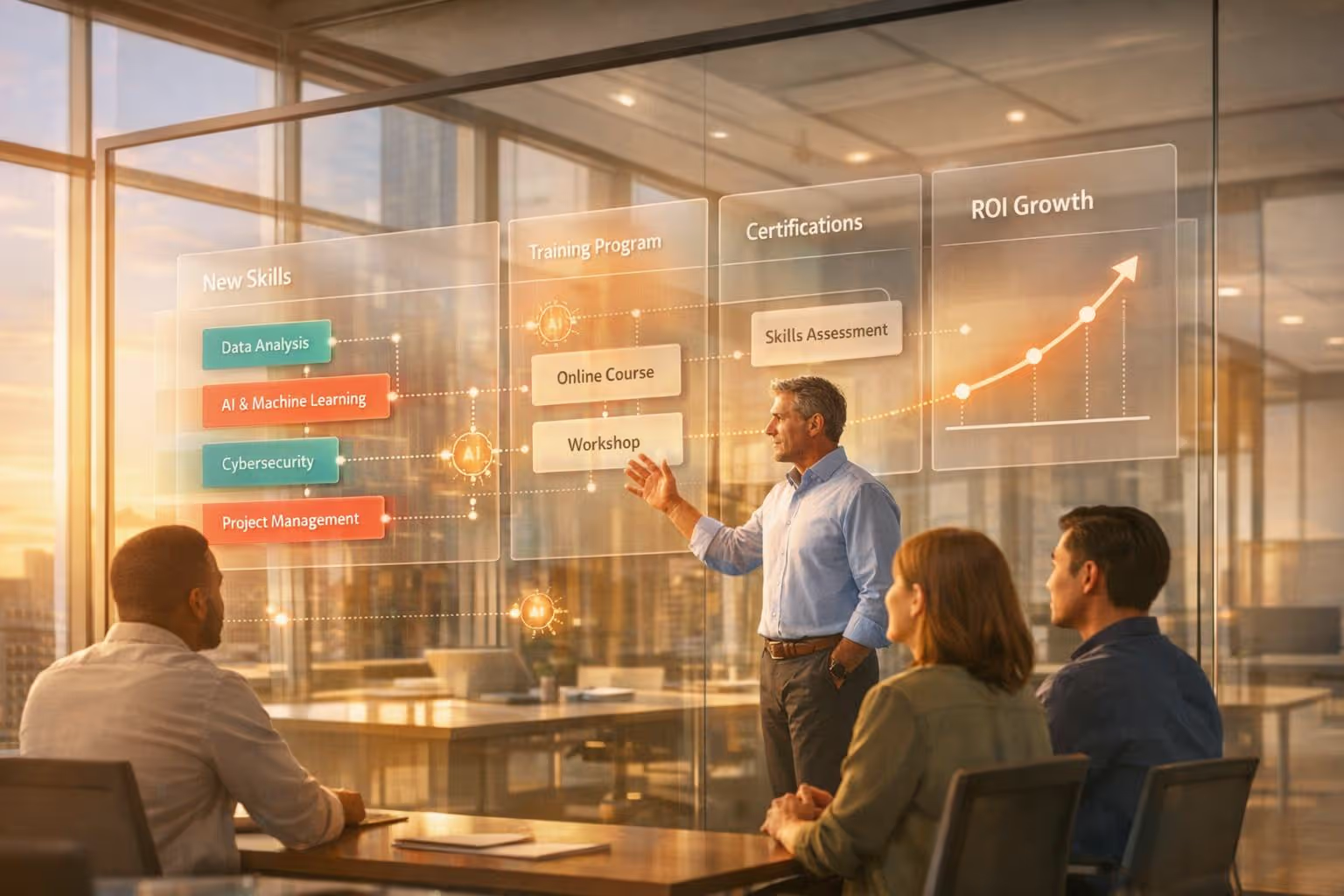
AI is changing jobs faster than ever - and reskilling is now a must. By 2030, 30% of work hours in Europe could be automated, pushing millions into new roles. France alone faces 12 million occupational transitions this decade. The challenge? Many skills have a lifespan of under five years, and 60% of employees already see AI reshaping their tasks. Companies that act now can boost productivity by up to 3.1% annually and unlock massive financial gains.
Key takeaways for businesses:
- Skills-based frameworks: Focus on employee capabilities, not rigid job titles. Use tools like AI-powered skills mapping and taxonomies for flexibility.
- AI-powered training: Personalize learning paths to address specific skill gaps. Companies like Airbus and PwC have proven this delivers strong ROI.
- Leadership-driven change: Leaders must prioritize and participate in reskilling efforts. Managerial tools like dashboards and peer-led training play a vital role.
Examples like AT&T and HCLTech show reskilling works when tied to clear business goals and tracked outcomes. Start small, measure results, and scale what succeeds. The future of work depends on it.

Workforce Reskilling Statistics and ROI: Key Data for 2030
How to Upskill Your Workforce for AI in 2025
sbb-itb-e314c3b
Strategy 1: Create a Skills-Based Framework
The long-standing practice of structuring work around rigid job titles is losing relevance as workforce strategies evolve. For French companies, adopting a skills-based approach is becoming essential. This approach focuses on identifying and leveraging employees' actual capabilities, aligning them with current and future organizational needs. Companies using this method are 63% more likely to meet business goals and 79% more likely to enhance the workforce experience [3].
At the heart of this strategy lies a skills hub - a centralized framework that provides a shared understanding of both technical and soft skills across the company. This hub is built on three pillars: a well-defined skills taxonomy, a reliable source of skills data, and clear governance to manage and update this information [3]. Without this structure, navigating workforce transformation can feel like steering without a compass.
Using Skills Taxonomies to Improve Workforce Flexibility
A skills taxonomy forms the backbone of workforce adaptability. Instead of focusing on broad job titles, it breaks roles into specific, measurable skills that can be tracked, developed, and matched to emerging opportunities. A critical aspect of this is identifying adjacent skills - skills closely related to an employee’s current expertise. These adjacent skills make it easier for employees to transition into new roles with targeted training rather than starting from scratch.
"Skills-based organisations are 79% more likely to provide a positive workforce experience and 63% more likely to achieve results."
– Deloitte [3]
To implement this, start by mapping the skills of your current workforce. Then, identify the competencies that will be critical in the next three to five years and look for overlaps. Tools like AI-powered talent intelligence can uncover hidden skills, helping you pilot this framework in a specific department before scaling it across the company [3].
This groundwork is essential for rethinking roles and integrating AI effectively into your operations.
Redesigning Roles for AI Integration
Once you’ve mapped out skills, the next step is to deconstruct roles into individual tasks. This allows you to identify which tasks can be automated by AI and which require human insight, paving the way for meaningful transformation.
A great example comes from CMA CGM, the global shipping company. In 2024, they launched an AI skills accelerator program led by CEO Rodolphe Saadé. This wasn’t a top-down directive; Saadé personally visited training facilities, monitored progress, and worked alongside employees to explore real-world AI applications across different business areas [2]. This collaborative approach redefined how work was structured.
The process unfolds in three stages [2]:
- Automate repetitive tasks.
- Optimize workflows to make the most of AI.
- Develop entirely new processes that were previously unachievable.
The time saved through automation should be reinvested in high-value activities like strategic planning, improving customer relationships, or driving innovation [5].
Companies like Vodafone and Amazon have already embraced this mindset. Vodafone aims to address 40% of its software developer needs through internal reskilling rather than hiring externally [1]. Amazon’s "Machine Learning University" trains employees with no prior experience, turning them into experts in the field [1]. These successes stem from more than just adding AI to existing roles - they reimagined work to combine human strengths with machine capabilities.
"Recruiting, reskilling, retention, and reengineering work are not separate things anymore. They are all interrelated, and they have to be interlocked with a talent intelligence strategy."
– Josh Bersin, Global HR Industry Analyst [4]
To begin, start small. Choose one department or role, break down its tasks, and determine which can be automated and which require human expertise. Involve employees throughout the process - they know the intricacies of their work better than anyone. Gather their feedback, refine the approach, and scale what proves effective.
Strategy 2: Implement AI-Powered Reskilling Programmes at Scale
Addressing large-scale skill gaps requires learning systems that leverage AI to provide personalised training based on employee data [8][10]. These platforms pull from sources like HR systems and project tools to pinpoint individual training needs, then create tailored learning paths that adjust as employees progress.
The reality is stark: leaders predict that 38% of the workforce will need fundamental retraining within three years [8]. Despite this, 87% of companies report skill mismatches, with many employees unsure how to incorporate AI tools into their daily tasks [6]. While 89% of organisations recognise the importance of improving AI skills, only 6% have taken significant steps to upskill their teams [9]. These numbers highlight the pressing need for training that delivers measurable outcomes.
French companies can draw inspiration from successful examples. Airbus upskilled 133,000 employees through Udacity, with over 1,000 graduates and an impressive 237% return on investment (ROI) [13]. Similarly, PwC committed €930 million over three years to train 75,000 employees, combining e-learning with hands-on workshops [7].
The secret lies in moving beyond generic training approaches. For example, Johnson & Johnson's Technology group introduced an AI-powered skills platform for 4,000 technologists in 2020. The programme mapped out 41 "future-ready" skills across 11 capabilities. By March 2024, over 90% of the team had accessed the platform, and voluntary learning activities increased by 20% [8].
"You can have the best technology, but without that integrated way of thinking, it won't transform anything."
– Jim Swanson, Executive Vice President and Chief Information Officer, Johnson & Johnson [8]
AI Learning Platforms for Technical and Soft Skills Development
Effective reskilling programmes align training with actual job roles. AI adoption rates vary significantly - 75% for tech roles versus 30% for service roles - making it essential to customise content [11].
LinkedIn Learning’s five-level training model, covering everything from AI basics to advanced R&D, shows the value of role-specific, tiered learning [7]. Cisco Systems exemplifies this, with a commitment to train 1.5 million people in cybersecurity and digital skills across Europe over five years. By early 2025, the initiative had registered 272,000 participants globally by integrating AI into existing certification pathways [6].
Hands-on experience is equally vital. IBM’s "IBMer watsonx Challenge" allows employees worldwide to use AI tools on real tasks. Participants reported doubling their digital credentials and saving significant time on documentation and automation [6]. Building practical AI skills means applying tools to real-world challenges.
Don’t underestimate the importance of soft skills. While technical training often takes centre stage, AI integration also demands strong problem-solving, critical thinking, and creativity. Google’s "AI Essentials" programme, backed by €121 million across regions like Europe and APAC, focuses on improving non-technical productivity, such as email drafting and brainstorming. Among participating educators, 83% expect to save over two hours weekly using these tools [6]. The time saved allows employees to focus on strategic thinking and building stronger relationships.
Tailored training doesn’t just improve skills - it drives measurable returns, which can be tracked through robust ROI methods.
Tracking ROI on Reskilling Programmes
To measure ROI effectively, use the Kirkpatrick Method, which evaluates satisfaction, competency gains, productivity improvements, and overall business outcomes [2][12].
Start by defining your goals, whether it’s achieving specific business objectives, improving productivity, retaining employees, or reducing the time it takes to master new skills. For instance, a company with €18.5 billion in revenue could see additional profits of €465 million to €930 million within 18 months by adopting generative AI [2].
Ericsson provides a great example. Over three years ending in 2023, the company trained more than 15,000 employees in AI and data science. Senior leaders reviewed results quarterly to ensure alignment with business goals, keeping the programme focused on outcomes rather than just activity [1].
A/B testing can help isolate the impact of training by comparing pilot groups with control groups, measuring differences in metrics like profitability or customer satisfaction [2][12]. Additionally, tracking early indicators - such as enrolment rates, re-enrolment rates, and periodic skills assessments - allows for real-time adjustments. On average, every €1 invested in AI training generates a return of €3.25 [7]. Achieving such returns requires consistent monitoring and a willingness to refine programmes as needed.
Strategy 3: Prepare Leaders to Drive Workforce Change
Leadership is the backbone of any successful effort to reshape the workforce, particularly when introducing reskilling initiatives tied to AI. Even the most well-designed programmes stumble without strong support from the top. Consider this: while 62% of C-suite executives identify talent shortages as their primary hurdle in scaling AI, only 6% of organisations have made meaningful progress in upskilling their teams [2]. Without executive buy-in, these efforts often stall before they can gain traction.
Senior leaders must integrate reskilling into the organisation's overall strategy. A standout example comes from a major shipping company, where the CEO personally participated in training initiatives. By visiting facilities, engaging with employees, and attending sessions, the CEO helped break down silos and encouraged adoption across all levels [2]. When leaders visibly prioritize learning, it sends a powerful message: this matters. This commitment trickles down to managers, who play a critical role in translating these initiatives into day-to-day operations.
Equipping Managers to Lead AI Adoption
Managers are the bridge between strategy and execution. To succeed, they need tools to identify their teams' skill gaps accurately. Take Johnson & Johnson's Technology group, which introduced an AI-driven "skills inference" system in 2020. This system analysed data from HR platforms, learning systems, and project tools to assess the skills of 4,000 technologists across 41 critical areas. By early 2024, over 90% of employees had engaged with the learning ecosystem, with voluntary learning activities increasing by 20% [8][14].
The process begins with defining a skills framework aligned with the organisation's long-term goals (think 5–10 years ahead). AI then evaluates employees' proficiency levels based on available data, and managers validate these results by assessing their teams. The goal? Achieve consistency, with scores differing by no more than one point on a 0–5 scale [8][14]. This combination of algorithm-driven insights and managerial input ensures accuracy while avoiding the biases often tied to traditional evaluations.
To make these insights actionable, managers can use visual tools like dashboards or heat maps. These visuals highlight gaps in capabilities - such as data engineering or decision science - across teams or regions, helping leaders allocate resources strategically [8][14]. However, this process relies on employees keeping their internal profiles up to date with job histories, certifications, and career goals. AI can’t fill in the blanks if the data is incomplete.
Workday’s "EverydayAI" initiative is a great example of how managers can drive adoption. By involving nearly 20,000 employees, the company used manager-led experiments and peer demonstrations to spark interest and boost engagement [15][16]. Managers who encourage experimentation and allocate time for learning see faster skill development and higher motivation among their teams.
"In the age of AI - when it's less about what you know and more about how you learn and adapt - leaders should be focused on empowering employees to experiment."
– Ashley Goldsmith, Chief People Officer, Workday [15]
Building a Continuous Learning Environment
Creating a culture of ongoing learning requires more than just announcing new training programmes. Jean-Philippe Courtois, Microsoft’s former head of global sales, shifted the company from a rigid "inspection culture" to a coaching-based approach between 2023 and 2025. Real-time dashboards replaced traditional forecasting rituals, freeing thousands of hours for client-focused work and fundamentally changing how teams approached skill-building [17].
Psychological safety is another key factor. Employees need to understand that AI is meant to enhance their roles, not replace them. When fears of automation linger, resistance to learning new tools often follows [2].
Peer learning also plays a pivotal role. When senior managers join training sessions alongside their teams, it creates a collaborative environment. Validating use cases developed by employees not only builds excitement but also ensures that training feels relevant and practical [2].
Setting individual learning goals tied to AI adoption can further boost engagement. Tailoring messaging to address specific departmental concerns helps make these goals feel personal. Given that the average lifespan of a skill is now less than five years, continuous development is no longer optional - it’s essential [1].
Here’s a quick summary of leadership actions that foster a strong learning culture:
| Leadership Action | Impact on Learning Culture |
|---|---|
| C-suite participation in training | Demonstrates that learning is a core business priority, not just an HR initiative |
| Manager-led experimentation time | Encourages practical application and boosts motivation |
| Peer demonstrations of AI use cases | Sparks enthusiasm and shows practical relevance |
| Individual learning goals | Encourages accountability and tracks progress effectively |
| Psychological safety messaging | Reduces resistance by clarifying AI’s role as a tool for augmentation, not replacement |
To measure the success of these efforts, organisations can use the Kirkpatrick Method. This framework evaluates learner satisfaction, skill development, individual productivity, and overall business outcomes, offering clear insights into what’s working and what needs adjustment [2].
When leaders model the behaviours they want to see, the impact can be transformative. For instance, Walmart’s Chief People Officer, Donna Morris, uses ChatGPT for tasks like senior leader searches and travel planning. This visible curiosity and willingness to experiment set a tone for the entire organisation [17]. When executives embrace adaptability, it empowers employees to do the same.
Case Studies: Companies That Succeeded with Reskilling
Examples from the business world show how well-planned reskilling efforts can lead to measurable success. These stories highlight how companies have implemented the strategies discussed earlier, going beyond announcements to truly transform their workforces and track meaningful results.
AT&T: Investing $1 Billion in Workforce Transformation
AT&T faced a tough challenge: 100,000 employees were in jobs that risked becoming outdated as the company transitioned from hardware to software, data, and cloud-based systems. Instead of replacing these workers, AT&T launched the "Future Ready" programme in the mid-2010s, committing $1 billion to reskilling efforts[18].
The initiative began by simplifying 2,000 specialized job titles into broader, skill-based categories, making the workforce more adaptable. AT&T also introduced a Career Intelligence Portal, offering employees insights into job trends, required skills, and salary expectations. To make education more accessible, the company partnered with Georgia Tech to provide an online Master of Science in Computer Science for under €6,300, a fraction of the €37,800 on-campus cost, fully covering tuition for eligible employees. Partnerships with Udacity and Coursera also opened up targeted online courses for specialized certifications[18].
By 2018, employees had completed 2.7 million online courses and earned 177,000 virtual badges. Retrained workers were twice as likely to fill critical roles and four times more likely to advance their careers. In 2016 alone, 40% of the 40,000 positions filled went to internal candidates[18].
"We could go out and try to hire all these software and engineering people and probably pay through the nose to get them... Or we could try to reskill our existing workforce."
– Bill Blase, Senior Executive Vice President of Human Resources, AT&T[18]
The programme’s success is reflected in individual stories, such as a technician transitioning into data science and a veteran stepping into a senior scrum master role. In June 2023, AT&T expanded its efforts into generative AI with "Ask AT&T", a secure internal tool now used by over 80,000 employees for tasks like coding and document summarization[19].
HCLTech: Training 25,000 Engineers in Generative AI
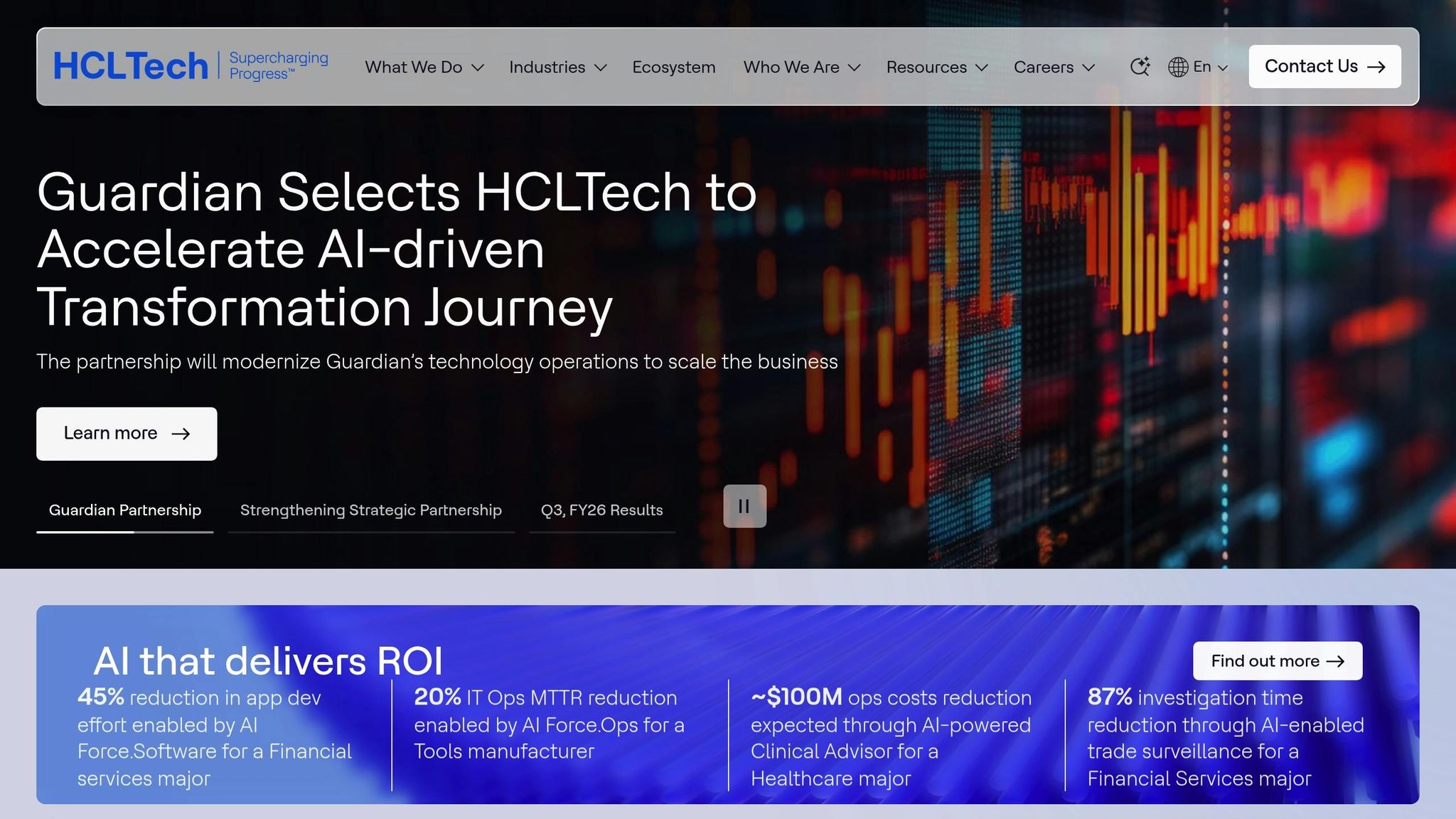
HCLTech took a focused approach to reskilling by zeroing in on generative AI. The company announced plans to train 25,000 engineers on Gemini for Google Cloud, equipping them with the skills to handle large-scale GenAI projects[20].
The cornerstone of this initiative is the HCLTech AI Force Platform, a pre-built solution designed to streamline the engineering lifecycle, from planning to maintenance. By embedding training into employees’ daily tasks, the learning process became immediately applicable. HCLTech also set up Cloud Native Labs and AI Labs to guide teams through generative AI projects, initially targeting industries like manufacturing, healthcare, and telecom.
"As technology skills have become more complex, the need to reskill has become paramount. Softer skills are also becoming very important."
– C. Vijayakumar, CEO and Managing Director, HCLTech[21]
Additionally, HCLTech’s TechBee Programme helps prepare students for careers in emerging technologies early on, addressing future talent shortages[21].
Gartner Data: The Path to Upskilling by 2027
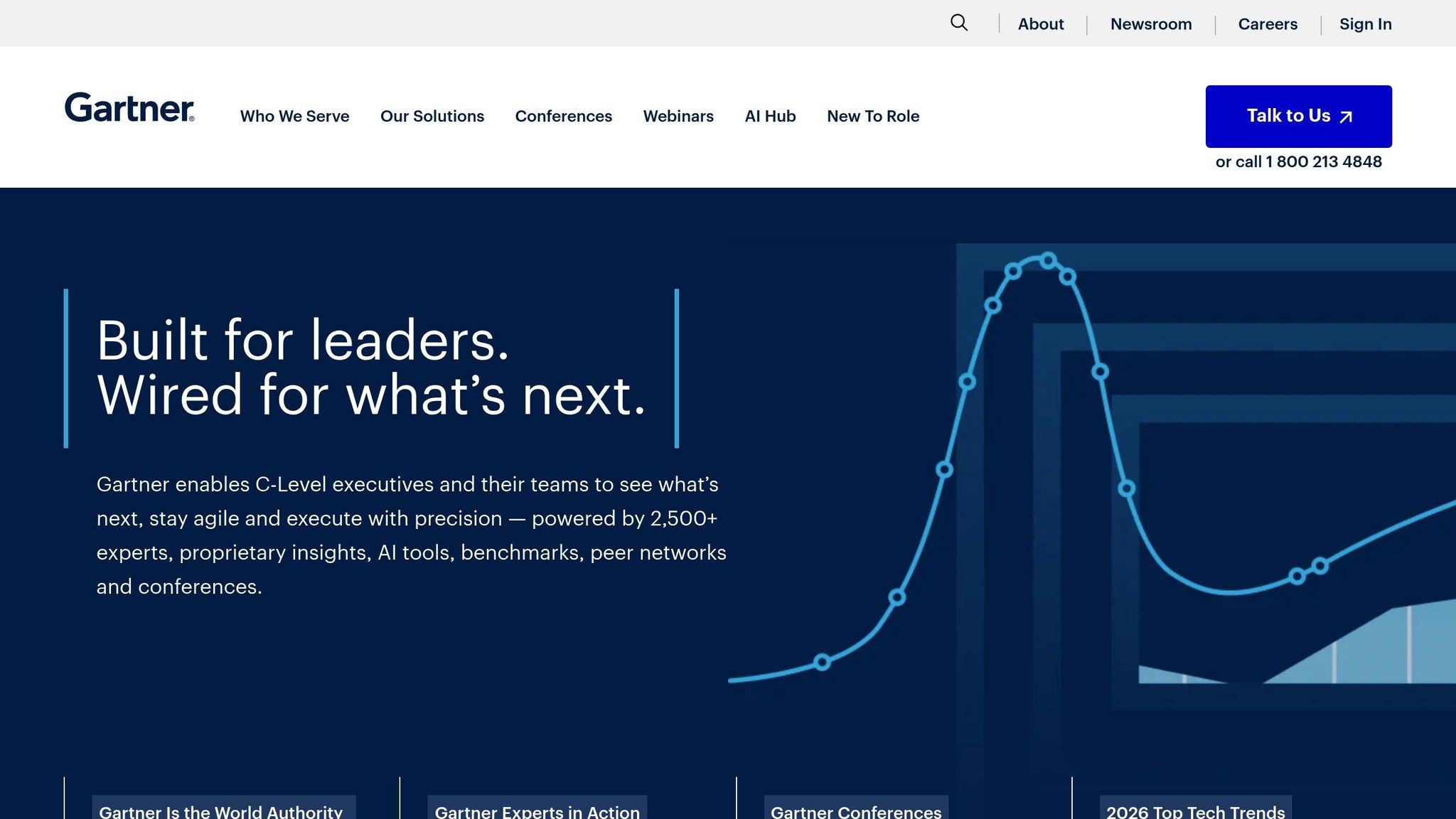
Gartner’s 10/20/70 rule - allocating 10% to algorithms, 20% to technology and data, and 70% to people and processes - offers a framework for effective reskilling. This aligns with France 2030’s aim to double the number of AI professionals and emphasizes that technology alone isn’t enough to drive transformation[22].
Companies that prioritize reskilling, provide clear career paths, and integrate learning into daily work see tangible benefits, including improved internal mobility and higher productivity. These outcomes are backed by billions in investments and millions of hours dedicated to employee development.
RAISE Summit: Learn Workforce Reskilling Strategies
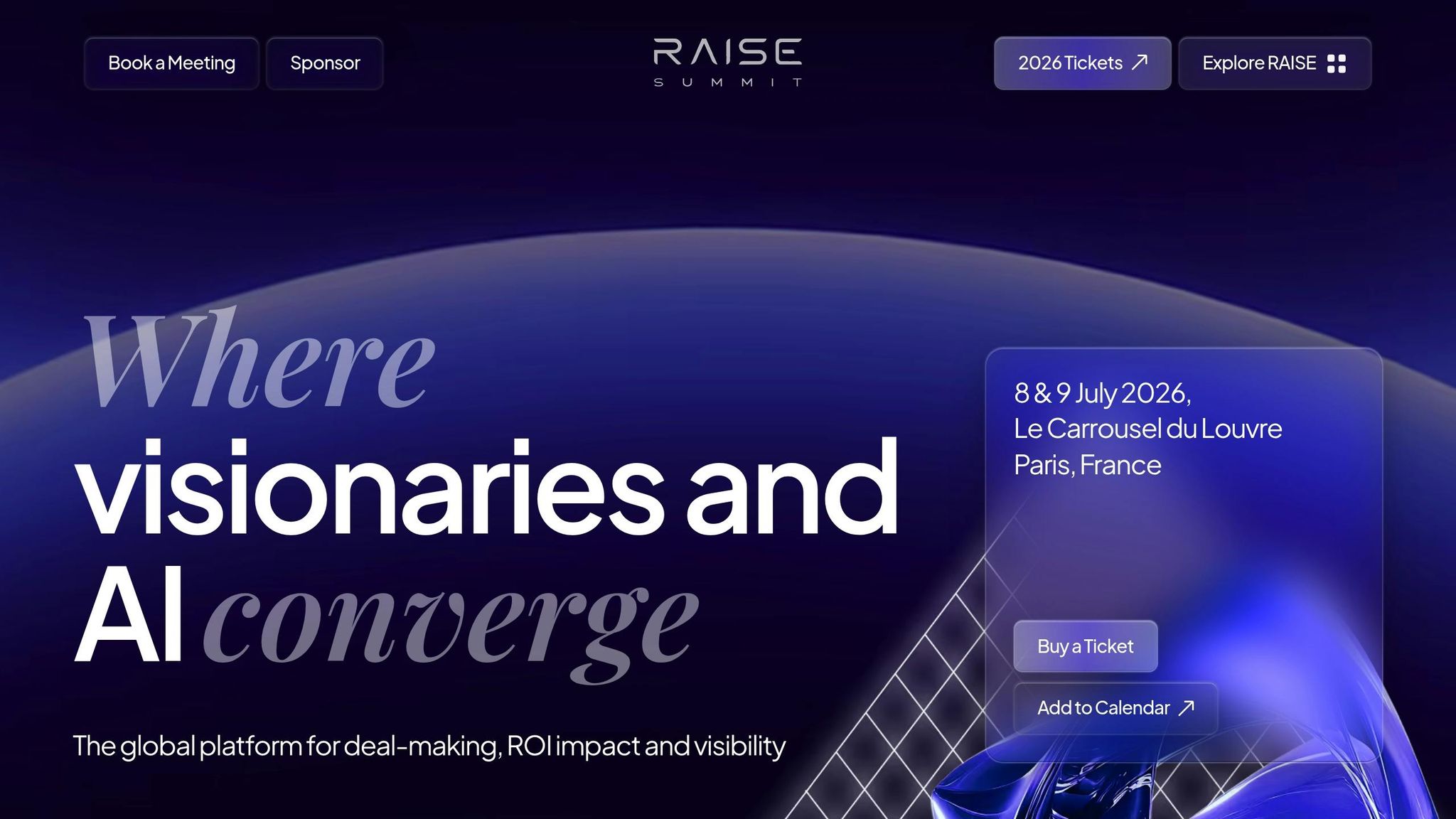
RAISE Summit 2026 is where theory turns into action. Building on earlier discussions about reskilling strategies, this event offers practical insights from leaders who’ve successfully navigated workforce transformation. It’s designed to help you take these strategies and make them work for your organisation.
RAISE Summit 2026 Program Overview
Set for 8–9 July 2026 at the iconic Le Carrousel du Louvre in Paris, the RAISE Summit will bring together over 9,000 professionals and 350+ experts. The focus? AI adoption and workforce reskilling. The event builds on established frameworks to fast-track workforce transformation and aligns with the reskilling strategies discussed earlier.
The programme is structured around the "4F Compass" framework - Foundation, Frontier, Friction, and Future. The "Friction" track zeroes in on workforce transformation, tackling ROI challenges tied to reskilling efforts[24][26]. Beyond the main stage, attendees can join a closed-door CxO Summit for high-level strategic discussions or attend the Machina Summit on 7 July, which spotlights innovations in physical AI and robotics[25].
Expect a high-powered networking environment - over 80% of attendees are C-level executives or founders. This creates opportunities to connect directly with leaders who’ve driven similar transformations[24][25]. Additional highlights include a €5 million startup competition and a global AI hackathon with €200,000 in prizes[24].
Ticket Pricing and Access Levels
The summit offers three ticket tiers, each designed to cater to different needs. Early-bird pricing is available until February 2026[23]:
| Ticket Type | Early-Bird Price | Standard Price | Key Features |
|---|---|---|---|
| PRO | €999 | €1,799 | Access to networking app, food & drink, and live startup competition pitches |
| VIP | €1,899 | €2,999 | Includes VIP lounge access, curated experiences, and all PRO features |
| VIP MAX | €3,499 | €4,599 | Adds an exclusive dinner in Paris to VIP perks and all PRO features |
For executives, the VIP and VIP MAX tiers also include exclusive industrial reports on cutting-edge AI trends[23]. If your focus is on physical AI and robotics, you can opt for the standalone Machina Summit ticket, priced at €699[23].
Conclusion: Preparing Your Workforce for the Future
The clock is ticking. With 40% of core skills expected to shift [9] and the average half-life of technical expertise now under five years [1], reskilling has become more than just an option - it’s an urgent priority. Organisations that succeed will approach workforce transformation as a strategic mission, not just another HR task.
To tackle these pressing challenges, three key strategies stand out: developing skills-based frameworks, rolling out AI-powered programmes at scale, and empowering leaders to drive change. These steps form the backbone of meaningful transformation. But let’s be clear - strategy alone isn’t enough. What truly sets successful initiatives apart is strong C-suite ownership and accountability. Leadership commitment is the linchpin that turns plans into measurable results.
As Harvard Business Review puts it:
"Reskilling today is a strategic imperative." – Harvard Business Review [28]
The financial upside of reskilling is undeniable. Yet, many executives acknowledge a glaring gap between the current state of AI skills and the pressing need for upskilling [9][2].
The path forward? Start small, measure impact, and scale what works. For instance, pilot programmes with 15–20 participants, combined with the Kirkpatrick method to evaluate outcomes - like learner satisfaction, skill improvements, productivity gains, and overall business results - can pave the way to long-term success [27][2]. By committing to these steps, your organisation can secure a competitive edge and be ready for what’s next.
FAQs
How can businesses in France measure the success and ROI of their reskilling programs?
To gauge the success and ROI of reskilling programs, businesses should adopt a clear and methodical approach. Start by setting specific objectives that align with your broader strategic goals - whether that’s boosting productivity, improving employee performance, or supporting overall business growth. From there, outline measurable KPIs to monitor progress. These could include short-term metrics like training completion rates or longer-term indicators like reduced employee turnover or increased revenue.
Don’t overlook the financial impact either. Compare the program’s costs - such as training expenses and temporary productivity dips during training - with tangible benefits like improved efficiency or reduced hiring costs. Beyond the numbers, take into account intangible benefits like stronger employee engagement or better retention rates, which, while harder to quantify, play a crucial role in long-term success. By carefully evaluating these elements, companies can effectively measure the ROI of their reskilling efforts and use the insights to refine or expand their programs strategically.
How can leaders and managers drive successful workforce transformation?
Leaders and managers are at the heart of successful workforce transformation, especially as reskilling becomes essential in the AI age. They are the ones who establish the vision, encourage a mindset of ongoing learning, and guide employees as they navigate new roles and technologies.
For transformation to take root, leaders must focus on building trust, offering personalised learning opportunities, and supporting employees through the challenges of change. Managers, on the other hand, are key to energising their teams, crafting clear career paths, and evaluating success based on practical results - not just how quickly new technologies are adopted. By leading with empathy and employing effective change management strategies, leadership can create an atmosphere where reskilling feels natural and sustainable. This approach enables organisations to adapt and thrive in a world that’s constantly shifting.
Why is focusing on skills essential for adapting to AI-driven changes in the workplace?
A skills-focused approach puts the spotlight on specific abilities rather than traditional job titles, making it a smart way to tackle the changes brought by AI. This strategy helps organisations pinpoint future skill gaps, encourage internal movement, and create reskilling programs that hit the mark. By zeroing in on skills, companies can stay agile in the face of rapid tech advancements, ensuring their teams grow alongside AI and automation.
For employees, this approach is empowering. It ties learning opportunities directly to their career goals, boosting both motivation and engagement. For organisations, it’s a forward-thinking tactic that lowers the chances of skills becoming outdated while keeping them competitive in a fast-evolving world. With most skills now having a shelf life of less than five years, focusing on skills ensures adaptability and a workforce ready for the future.